Duolingo is a top-rated education app often recommended as a safe and fun way to learn another language. While it does teach vocabulary and basic language patterns, Duolingo has evolved into a gamified engagement platform that even adults find themselves “addicted” to.
Here are Five Facts every parent needs to know about Duolingo:
#1 Fun way to learn a new language
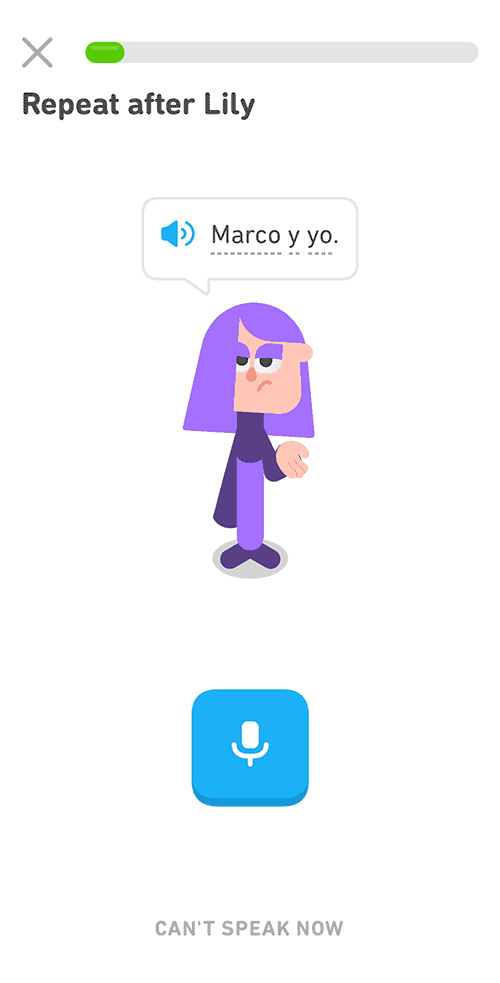
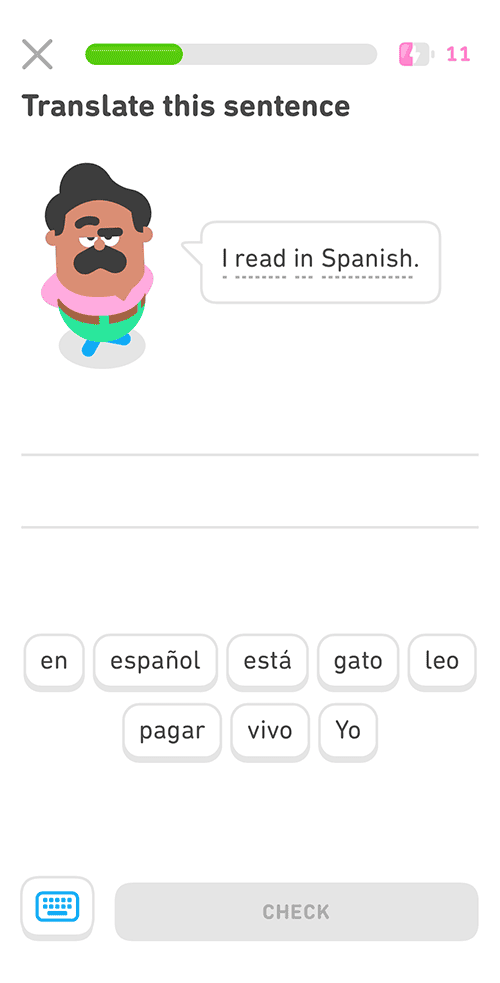
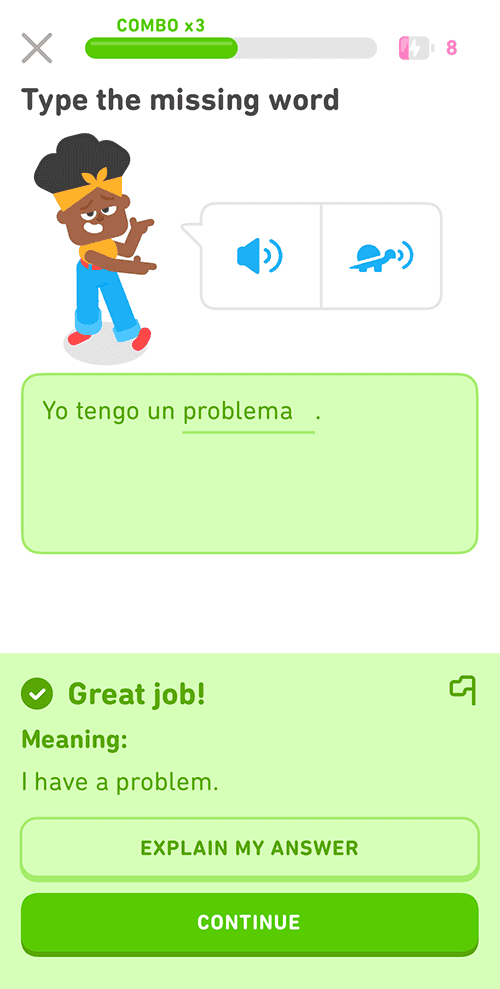
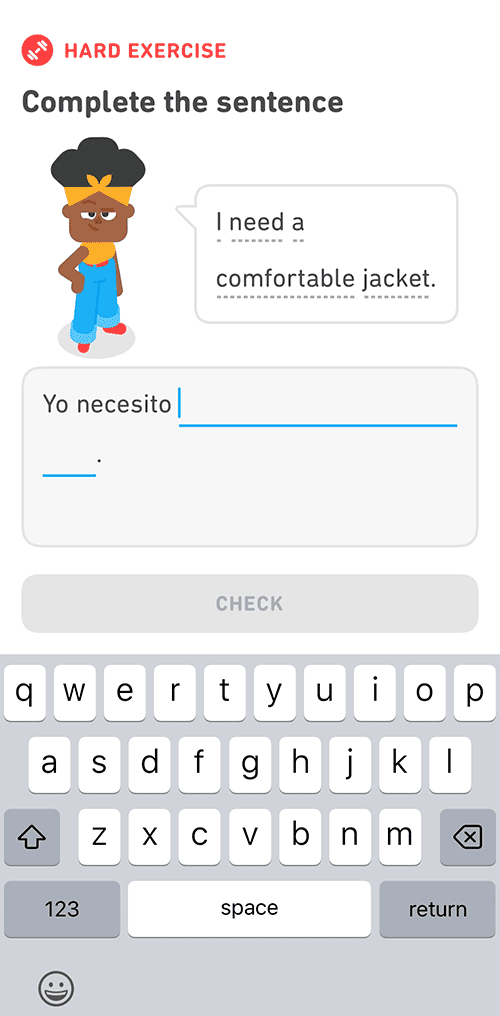
Duolingo is the world’s most downloaded educational app. It’s free to download and offers 40+ languages, real-world math skills, music, and even chess. “Learners” (they never say “users”) practice speaking, reading, listening, and writing (typing) to build vocabulary and grammar skills.
According to the app developers, Duolingo offers game-like lessons and fun characters to enhance the learning experience and keep you motivated. Playful rewards and achievements are given with daily practice to help “learners” work towards their learning goals.
The learning content is always free, but subscriptions are offered an enhanced learning experience:
- SUPER Duolingo
- No ads
- Unlimited energy
- Unlimited speaking and listening practice
- Free entry into timed challenges
- $13.99/mo OR Family Plan (2-6 members) $9.99/mo or $119.99/yr
- MAX Duolingo
- No ads
- Unlimited energy
- Video call for low-stress speaking practice (w/ AI avatar)
- Roleplay to prepare for real-world scenarios
- $13.99/mo OR Family Plan (2-6 members) $19.99/mo or $239.99/yr
#2 Engagement first, learning second
It’s worth noting that Duolingo began as a straightforward language-learning app in 2010. Since then, however, the business model shifted towards maximizing daily engagement rather than language mastery. They built in gaming mechanics such as streaks, leaderboards, experience points/gems, timed rewards, push notifications, loss-aversion tactics, and monetization.
Duolingo promotes its content as bite-sized, thus joining the ranks of short-form content platforms such as TikTok and Micro-Drama apps. The reality is: short-form content isn’t popular because it’s effective; it’s popular because it’s addictive.
When Duolingo speaks about “building a daily habit,” they aren’t referring to a learning habit or studying habit – they’re referring to a Duolingo habit. All of these maximum engagement features (see #3 below) push “learners” to return to the app every day. Missing a day isn’t about the vocabulary and sentence structure lessons missed – it’s about losing streaks, ranking, and disappointing Duo the owl.
Because the app rewards speed, repetition, and short interactions, it feels productive and efficient. In reality, though, the result is shallow learning with limited long-term retention.
#3 Staying motivated to your commitment
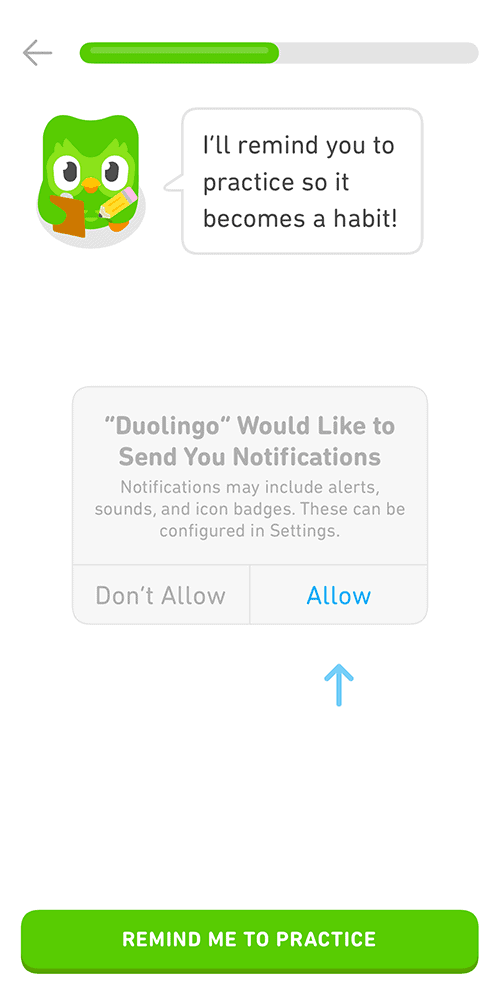
Maintaining motivation is a known crux for many second language learners. This is why Duo, the owl, is there to remind you to practice and cheer you on.
It begins with push notifications, then (repeatedly) urges you to install a widget so Duo can cheer you on from your home screen.
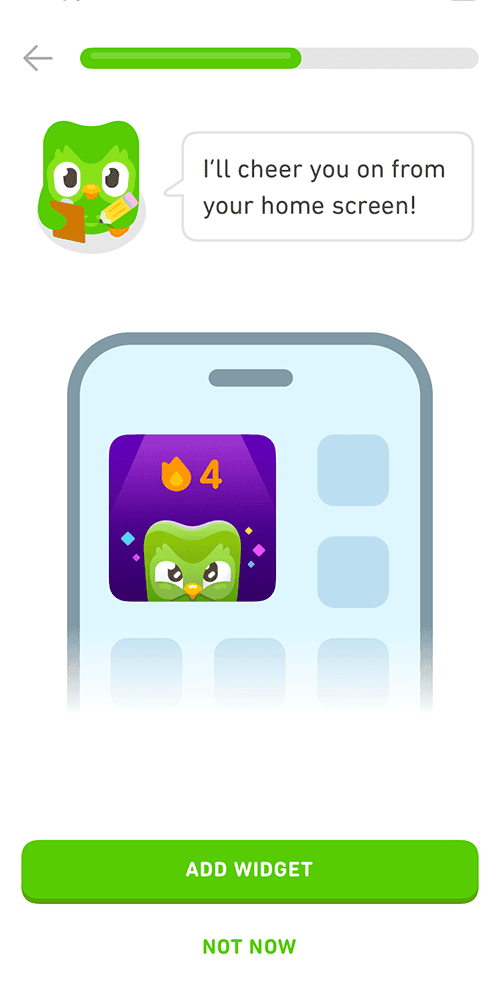
From here, there are so many Duolingo unique gamification features that it’s worth explaining the extent to which it goes to “keep you motivated.”
XP
After you complete a lesson, you are rewarded with Experience Points (XP). This is the primary currency on Duolingo, designed to keep you motivated and engaged. XP can be earned by completing lessons, practice, stories, timed challenges, and daily quests, and by maintaining streaks. They are also the primary way to rank up in weekly leaderboards and leagues.
Streaks
Streaks are the primary way Duolingo helps you build a habit of practicing every day. The app prompts you to commit to a “Streak Goal” for your learning. Push notifications prompt you not to lose your streak, but if you know you’re going to miss a day, you can purchase “Streak Freezes” with earned Gems.
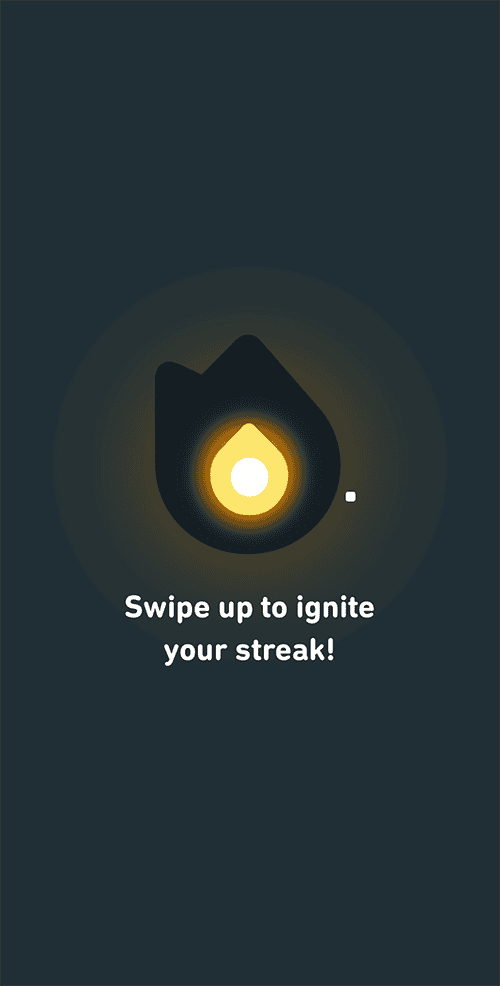
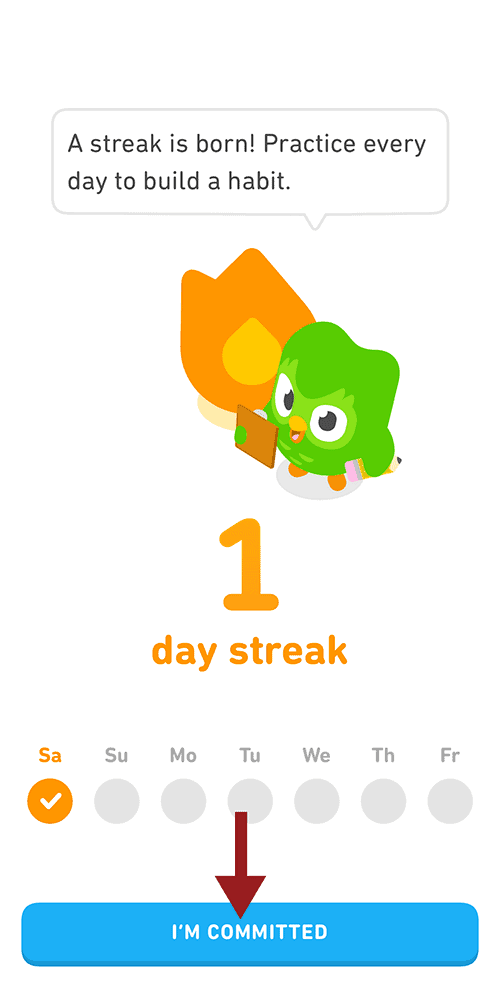
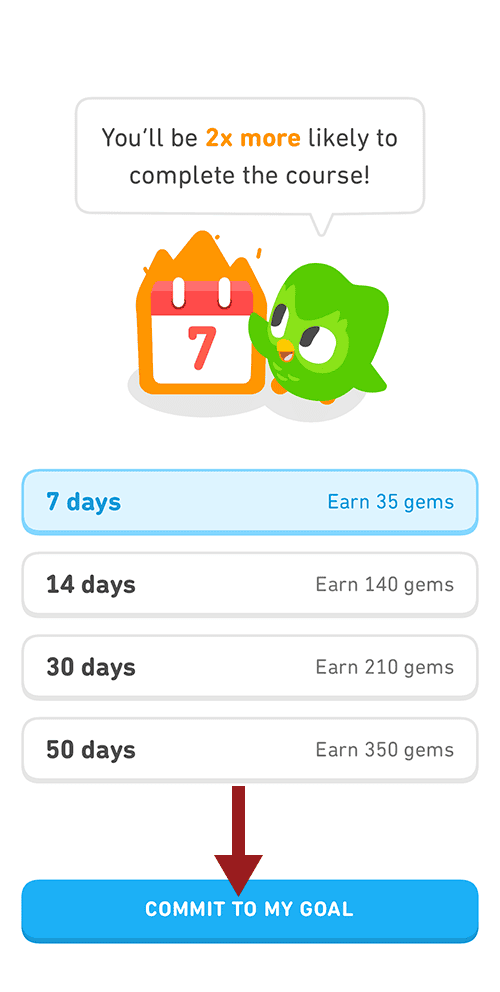
You can track friends’ streaks and join the “Streak Society” by reaching your 7-day streak goal. This, of course, also earns you an exclusive reward.
Gems
Gems are a virtual currency used in the in-app Shop to purchase helpful items such as Streak Freezes, Timer Boosters, Legendary Levels, Bonus Skills (i.e., flirting, idioms), and XP boosts. Gems are earned by completing daily and friend quests, finishing in the top spot in Leagues, maintaining your streak, and opening reward chests in the learning path.
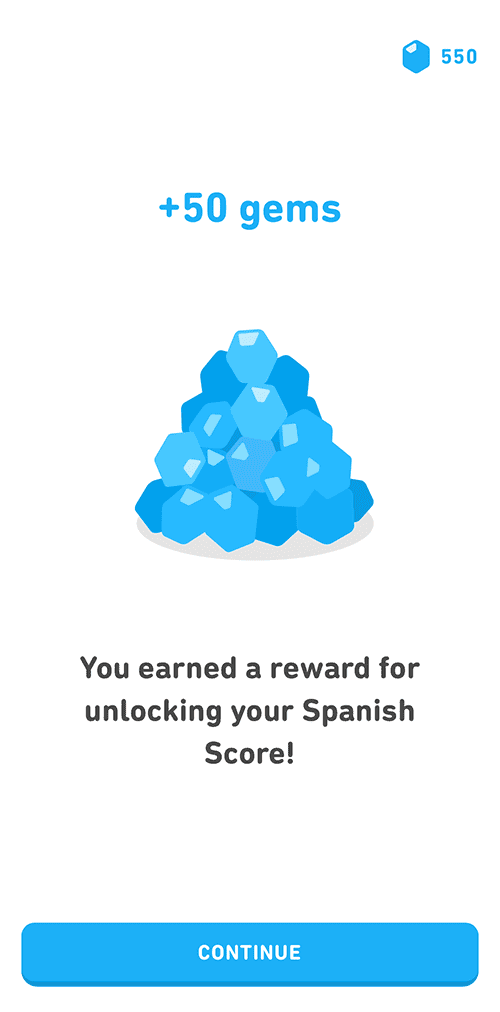
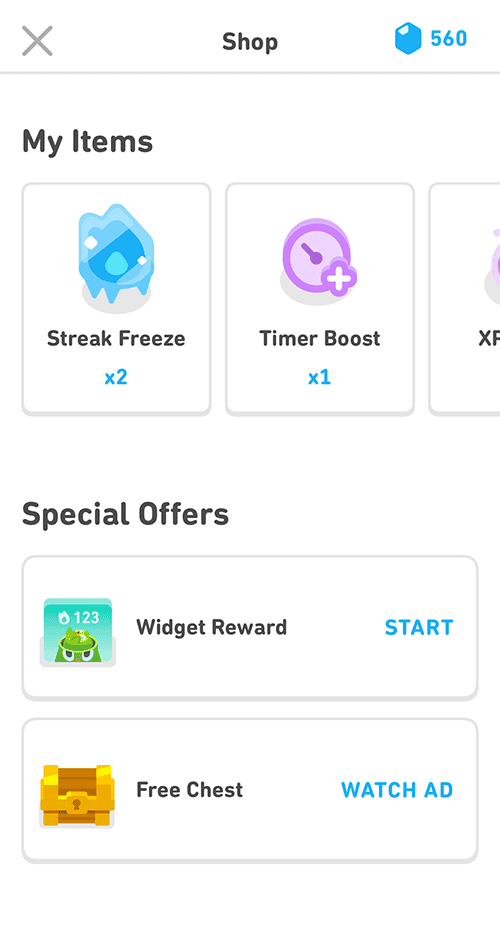
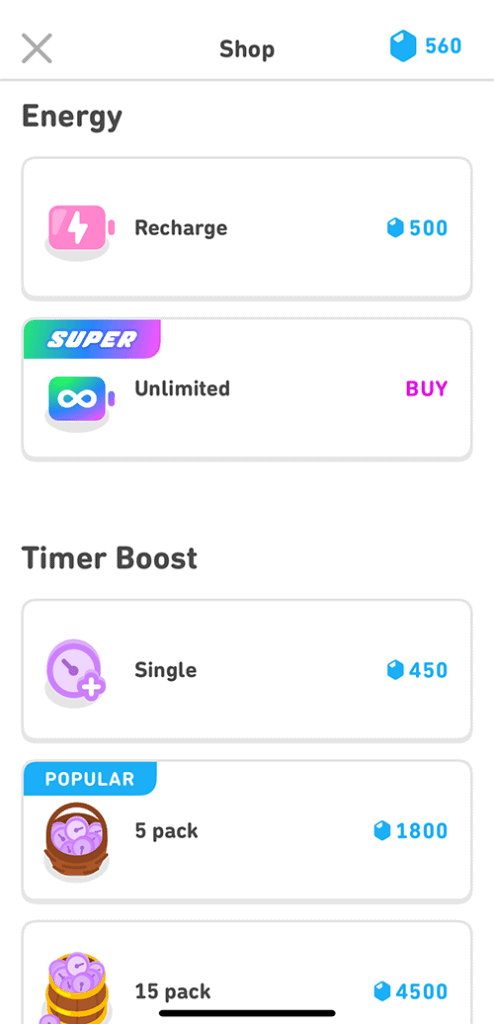
Notice how, in the Shop, special offers such as a reward for adding the widget and a free chest for watching an ad are promoted.
Energy
Duolingo quips that Energy “powers your learning.” Every free user begins with 25 units of energy and every question answered costs 1 unit. If you answer several correctly in a row, you may earn back a few energy units (= variable reward). Energy can also be gained through Streaks, ads, Gems, time (recharges daily), or a subscription (“unlimited energy”).
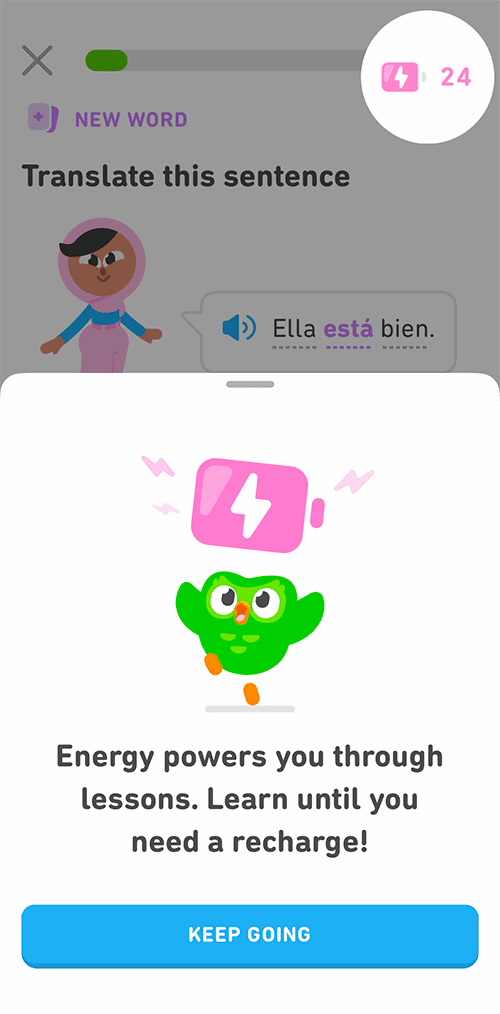
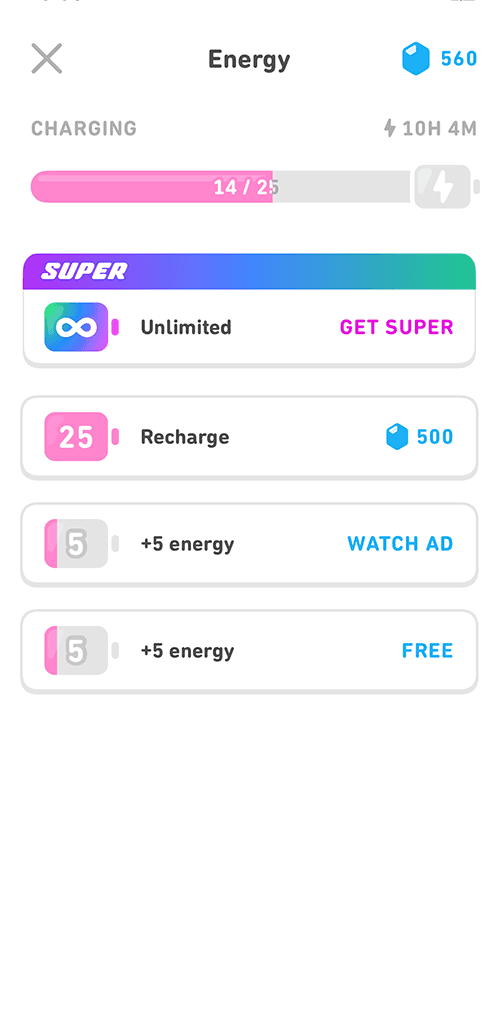
The Energy system is a recent change from the former “hearts” that penalized mistakes and locked you out of the app. Energy, Duolingo claims, promotes balanced learning and increases motivation compared to the old system.
#4 Social feed
Duolingo offers a feed, much like social media platforms, that displays the learning milestones, achievements, and shared sentences of those you follow. The purpose undergirding this feature is social connection and motivation. The Duolingo blog says that “learners” are 5.6 times more likely to finish their course when friends can see their progress. “Learners” can cheer friends on as they reach milestones by “hearting” the post.
Interestingly, our test account did not follow anyone, nor did anyone follow us. Yet, we were still given a feed of random “learners” milestones. This allowed us to tap on random profiles to see their stats. From here, we could follow this person or any of the thousands that has “hearted” the post. A quick way to connect with strangers (who cannot offer true, meaningful connection).
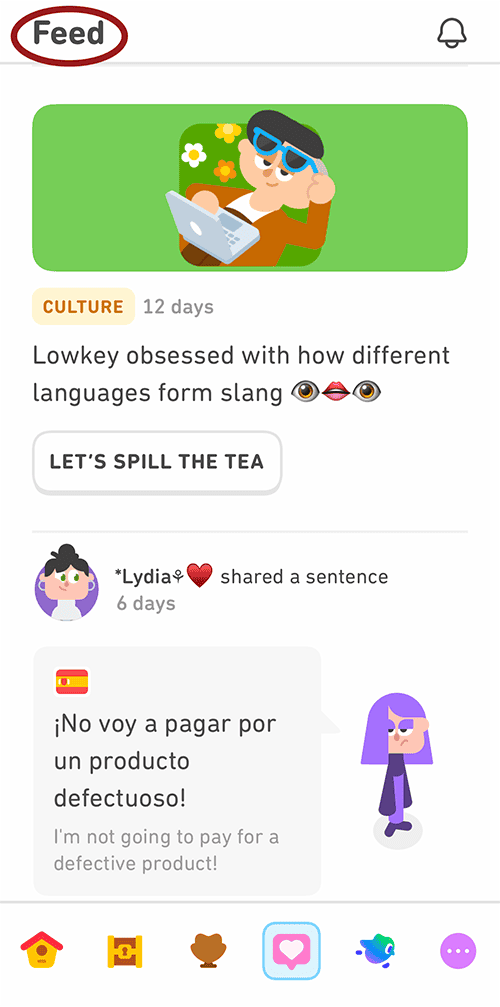
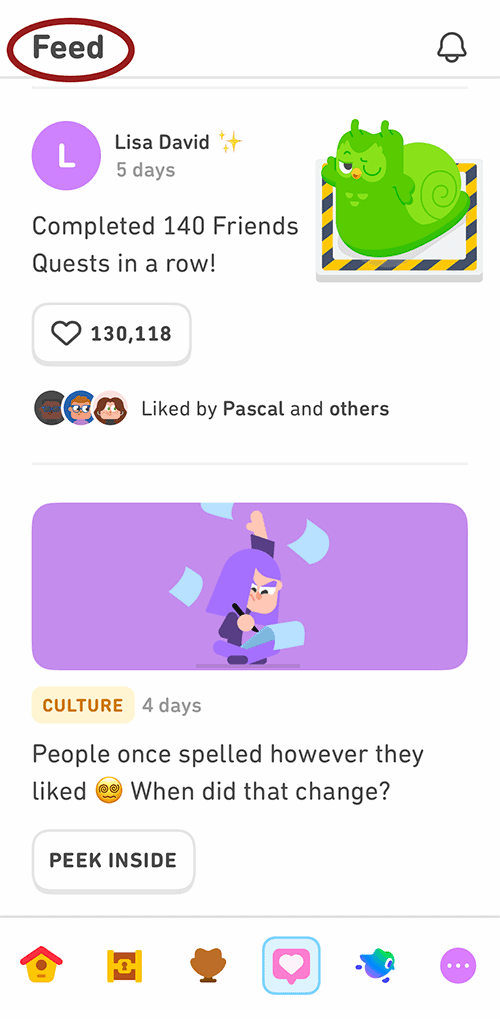
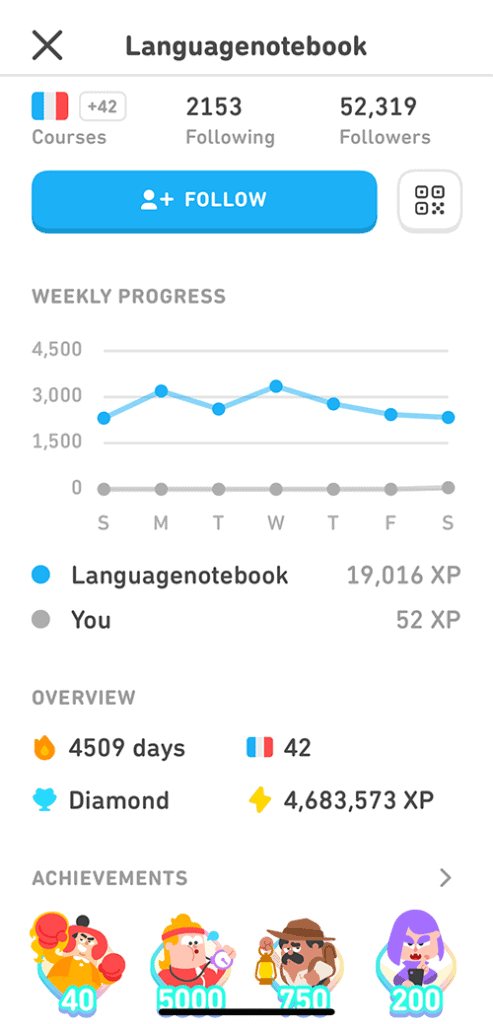
Thankfully, there is no direct messaging other “learners” on Duolingo. That said, the Duolingo blog highlights a story about a man from the US and a woman from the Philippines who met on Duolingo and eventually married. So, it is technically possible to find a Duolingo user’s social accounts and begin chatting. Great for that adult couple, but dangerous territory for children.
#5 Rating, Recommendation, and Biblical Considerations
Apple App Store: 4+
Google Play: E for Everyone
Duolingo: 13+ (yet acknowledges under 13 are present on the app)*
Brave Parenting: 16+
There is no denying that Duolingo is a beautifully designed, intelligently organized, and addictively engaging app. There is a reason why they are lauded as the gold standard of gamified learning. But just because they can turn language learning into a daily habit does not mean they are effectively building fluency.
Gamified learning at this scale uses the same psychological manipulation tools as social media platforms and video games to shape children’s habits and maximize engagement. While the content of Duolingo is language learning (rather than skin care and looksmaxxing as on social media), the nature of its habit formation is one of addiction and compulsion. Children and young teens must learn to cultivate intrinsic motivation for productive, healthy habits. A habit built on extrinsic rewards like XP, Gems, and Streaks will not last once the rewards are gone.
The adult life of working, paying bills, investing in marriage, and raising a family is entirely un-gamified. Rewards abound, but it takes intrinsic motivation to work hard, steward responsibly, love sacrificially, and disciple wisely. When children grow up with everything gamified, from eating to hygiene, and entertainment to learning, they will lack the perseverance necessary for basic success.
Brave Parenting’s recommendation for Duolingo of age 16 mirrors our recommendation for social media. It’s not that 16 is a magical age of maturity and wisdom, but it is the age deemed appropriate to drive a car and get a job. At this age, they should have established habits and patterns for accomplishing goals that are built on intrinsic motivation.
And anyway, if they really want to learn a language, there are better (less gamified) apps for that.
*A note regarding Duolingo’s age requirement:
Duoling knows children under 13 are present on their app because they state that for anyone under 13, the leaderboards are disabled, social features are restricted, and experiences are segmented by age. This demonstrates that their age-gating is merely a procedural measure to limit their liability. All of the addictive mechanisms driving engagement (streaks, XP, gems, and push notifications) are still present for those under 13.
Biblical Considerations
Grown adults have expressed in blog posts and published articles that they inadvertently became addicted to Duolingo.
If grown adults, with fully formed brains, jobs, families, and responsibilities can get addicted, we’d better believe the same captivity awaits children.
Addiction
Some reject the use of the term “addiction” in relation to the psychological manipulation tactics of social media, video games, and gamified learning. Scripturally, addiction is conveyed as slavery, idolatry, and a lack of self-control. Paul warns believers against being mastered by anything other than God (1 Cor 6:12).
As a slave, you must submit to a master. As an idolater, you worship man-made objects. As one without self-control, you obey your desires.
As a Duolingo learner, it’s possible to embody all three of these sins. No app is worth that.
Parenting
As parents, we are entrusted with children to steward, to disciple, and to shepherd. We are commanded to love God with all our heart, mind, and strength, and to teach God’s commands and his faithfulness to our children (Deut 6:6-7). Parents are to bring them up in the discipline and instruction of the Lord, meaning training children the same way God continues to train us (Eph 6:4; Heb 12:6). Scripture tells us that folly is bound up in a child’s heart, but discipline drives it out and brings blessings (Prov 22:15; Ps 94:12). A failure to discipline results in dishonor for both parent and child (Prov 10:1).
As 21st-century parents, discipling and discipline often require withdrawing from the fun and convenience of the online world. Willfully allowing a child to engage with anything that is known to produce addictive-like behaviors is neither biblical nor loving. Whether it is drugs, alcohol, pornography, or a language learning app, the premise is the same.