


Internet culture has coined a new term to describe what grandparents have been doing for generations: “nonnamaxxing.” It describes the slow-paced, traditional life often associated with grandmothers: scratch-made meals, gardening, knitting, long walks, hand-written notes, puzzles, and a quiet rejection of a screen-saturated life.
It’s easy to see why these analog and old-fashioned ways of life are appealing, especially to young adults. These slow, dignifying, productive tasks give children something the digital world does not: meaning, purpose, and visible fruit from their effort.
But for Christian families, this is more than a new aesthetic or internet trend.
Children are meant to learn this way of life from their grandparents. It is generational wisdom and shared heritage.
But sadly, this is vanishing.

Preserving Heritage
Scripture is clear that faith and wisdom are to be intentionally passed down from one generation to the next.
“Only be careful, and watch yourselves closely so that you do not forget the things your eyes have seen or let them fade from your heart as long as you live. Teach them to your children and to their children after them.” -Deut. 4:9
“…things we have heard and known,things our ancestors have told us. We will not hide them from their descendants; we will tell the next generation the praiseworthy deeds of the Lord,his power, and the wonders he has done.” -Ps. 78:3-4
Generational influence is not optional; it’s how discipleship is done, so that the family has greater influence than culture.
There are various reasons why grandparents rarely share their lives with their grandchildren, why generational wisdom is no longer passed down, and why family heritage is lost.
The obvious includes geographical displacement (families no longer live near one another), chosen separation (“canceled” often due to political or ideological differences), increased prioritization of sports and extracurriculars for kids (makes for really busy lives), and, of course, internet-connected devices (distracts everyone from real life).
While there are some things that grandparents cannot change about their situation, for those who have contact with their grandchildren, there remains a rich opportunity to invest in the next generation.
The key is to ensure that heritage is passed down. Grandparent to grandchild. The experienced teaching the inexperienced. The mature patiently guiding the immature.
It’s not about kids teaching their grandparents how to do a TikTok dance or play Fortnite. It’s not about spoiling kids with unlimited YouTube time, because ‘what happens at Grandma’s stays at Grandma’s.’ No. What children need is what the internet cannot teach. They don’t need their grandparents to “meet them where they are.” Children need their grandparents to show, teach, and tell them about an offline life they’ve never known. A life of labor and love; how to work with their hands, sit in conversation or silence, and to appreciate wisdom.
This is how heritage is preserved.
Slow Things Build Character
Not only can children gain appreciation for where they’ve come from, but the slow-paced life of grandparents is an opportunity for character formation.
Consider the following activities and the natural virtue they develop, not to mention the practical skills they teach:
Cooking
Teaches patience, diligence, hospitality, service, and gratitude.
Builds skills of measurement/calculations, following directions, time management, and (importantly) knowing how to cook.
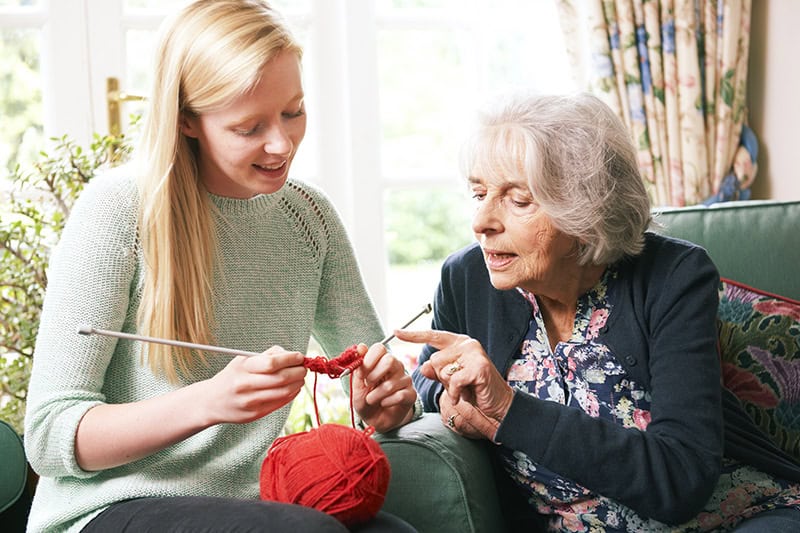
Sewing, Crocheting, or Knitting
Teaches attention, focus, repetition, repair, and perseverance.
Builds fine motor skills, math / spatial reasoning, planning, patience, focus, and emotional regulation.
Gardening
Teaches stewardship, dependence, hard work, responsibility, delayed gratification, and confidence.
Builds skills in science, math, nutrition, problem-solving, and physical coordination.
Woodworking or Model Cars
Teaches planning, precision, creativity, patience, and focus.
Builds fine motor skills, coordination, sustained attention, and spatial reasoning.
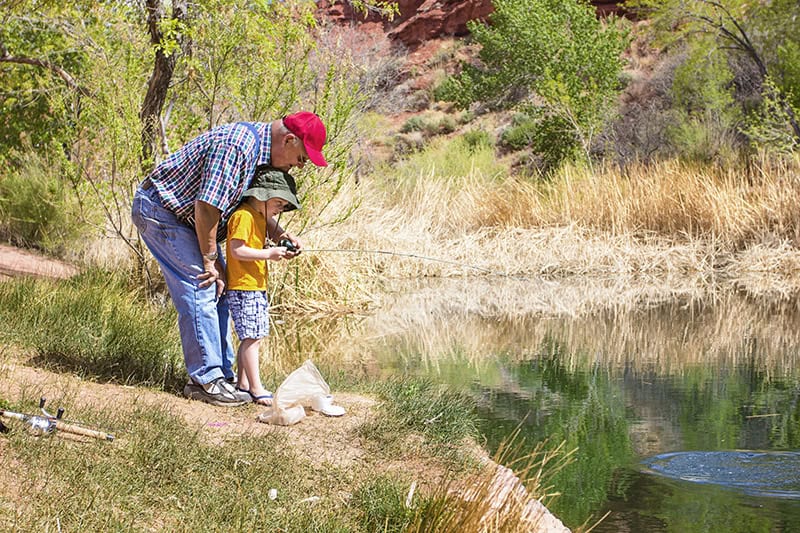
Fishing
Teaches stillness, observation, resilience, frustration tolerance, and patience.
Builds hand-eye coordination, problem-solving, critical thinking, and applied science.
And so many more, like car repair, baking, canning, letter writing, scavenger hunts, hiking, camping, board games, card games, and storytelling.
These activities form the hearts and minds of children in healthy ways. The internet can teach them how to crochet, change a tire, and make bread, but it is disembodied. YouTube can transfer information, but it cannot place a child beside someone who loves them. It cannot give them the experience of having their grandmother’s hands guiding theirs as they learn, or hearing their grandfather’s correction, laughter, and stories.
So how can parents and grandparents make this kind of generational investment more likely to happen?
Making it Happen
A few recommendations for parents and grandparents to make the most of time with their grandchildren.
Parents:
- Do not send children to their grandparents with any type of phone, tablet, or gaming system.
- Ensure time is intentionally set aside for grandchildren to spend time with their grandparents (and without you).
- Humbly recognize that grandparents can teach and shape children in ways that you cannot.
- Encourage your children in advance to honor their grandparents in speech and behavior.
- If grandparents are no longer alive, find a couple in your church who perhaps don’t have any grandchildren but would love to serve as “adopted” grandparents.
Grandparents:
- Do not have screens on (not even the news) when grandchildren are visiting. Avoid excessive phone checking. This is essential!
- Allow enough time to spend together to hit the sweet spot between offline enjoyment and learning, without overexerting yourselves.
- Plan ahead which slow activities and skills to pass on; have what you need ready for when they come.
- Start small. A child accustomed to fast-paced entertainment may not be ready for a multi-hour project.
- Children are often heavily rewarded at every step in online games and educational apps. As tempting as it may be, they do not need constant rewards and instant gratification in your home.
- If you live far away from your grandchildren, write letters instead of defaulting to texting. Send it with a self-addressed, stamped envelope and paper so they can easily write back to you.

Continue in Perseverance
Even with the best intentions, this will not always feel easy. Many kids (and adults, if we’re honest) who spend significant time online and on screens have shorter attention spans, less patience and perseverance, and an unwillingness to do hard work for a delayed reward. They resist slow activities, quiet tasks, and long stories.
Grandparents must be prepared to persevere.
Children may sigh, complain, pout, or whine about participating in these shared activities. Grandparents must not interpret this as rejection or failure. Instead, they should recognize this as evidence of the very character formation children still need. Children’s resistance demonstrates that they need what you offer: patience, humility, and presence.
Knowing the long-term benefits of the slow activities, grandparents must endure the resistance. Calmly remind your grandchildren, “I want to teach you this because it matters,” or “you don’t have to love it yet, but you need to try.” And do not give up.
The children may not appreciate it today. It may appear that you’ve accomplished nothing. Persevere anyway.
Because one day, they’ll smell cinnamon or sawdust, they’ll hear a hymn, hold a tool, sew a button on a shirt, or make your recipe, and they’ll remember you. They will remember your love, your faith, and your wisdom. They’ll cherish their heritage.
And, by God’s grace, they will teach it to their children and their children’s children.