Zigazoo is widely considered a safe social media alternative for children. More than just safe from predators, it claims to be educational.
Our research revealed the opposite. This app may have started with good intentions, but it has sold out to be another platform extracting maximum engagement, exploiting young girls, and promoting consumerism, materialism, and narcissism. Because most online reviews for parents are positive, we want to begin with a NOT RECOMMENDED review.
If you’re still curious to learn more, here are the facts every parent needs to know about Zigazoo. (Key facts in RED.)
#1 What is Zigazoo?
Zigazoo is a social media platform made just for kids. Their website states a mission to “give youth a safe and positive community where they can find joy, develop healthy online relationships, and aspire to their greatest potential as tomorrow’s digital citizens.”
Created by two former educators (who also worked in the EduTech space), they claim to have applied their expertise in child development and education to create a social platform with children’s well-being in mind. The platform is designed to “highlight the opportunity for confidence and relationship building, digital literacy, self-expression and fun.”
The app launched in April of 2020, at the rock bottom of the pandemic, and quickly gained traction among desperate parents seeking safe, engaging apps for children.
In 2023, it was reported that the original Zigazoo was rebranding as Zigazoo Kids, a project-based learning app geared towards children 3-12. Zigazoo was then marketed for kids over 13.
⇒ As of 2026, there is only ONE Zigazoo app available through Apple and Google, which is clearly the 13+ version.
#2 Key Features
Video Challenges
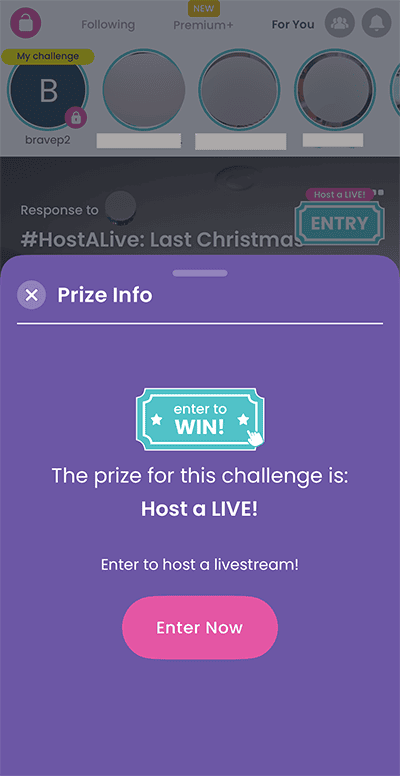
Kids are encouraged to take part in challenges ranging from dances to personal preference questions.
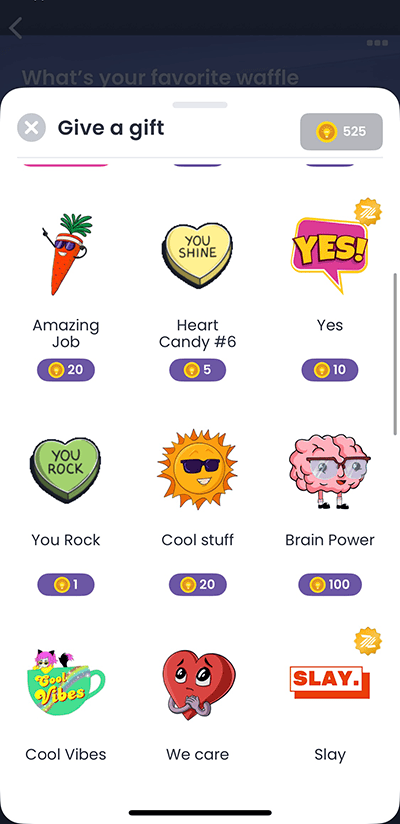
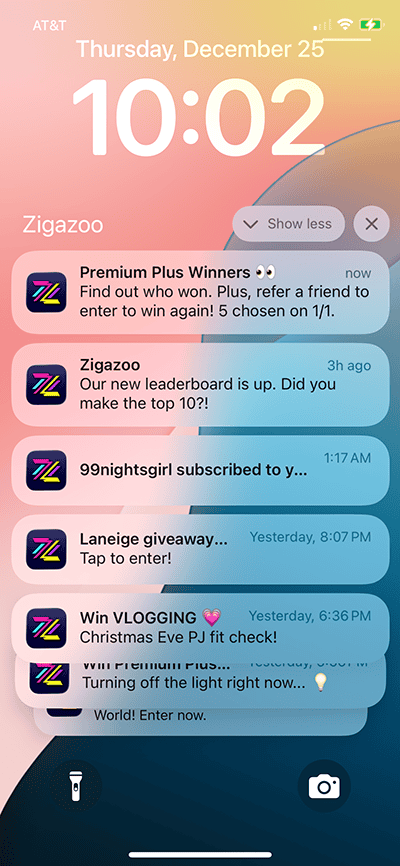
Challenges are posted by either verified users (those with a subscription) or brands (naturally, these challenges feel like ads). The prizes for the challenges are Zigazoo badges, a Premium Plus account for 30 days, or a Zigazoo channel.
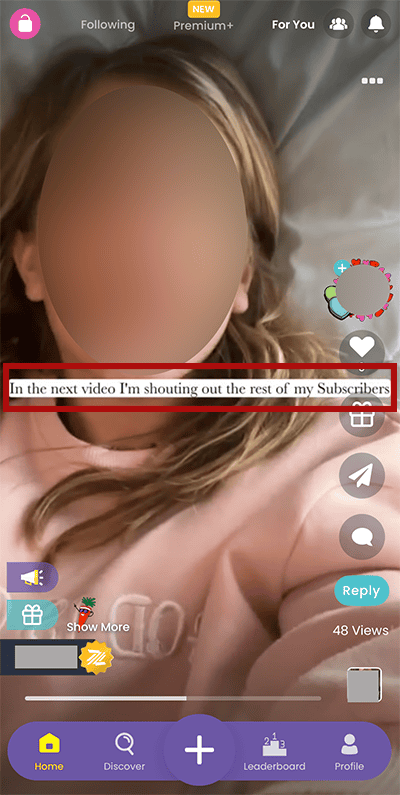
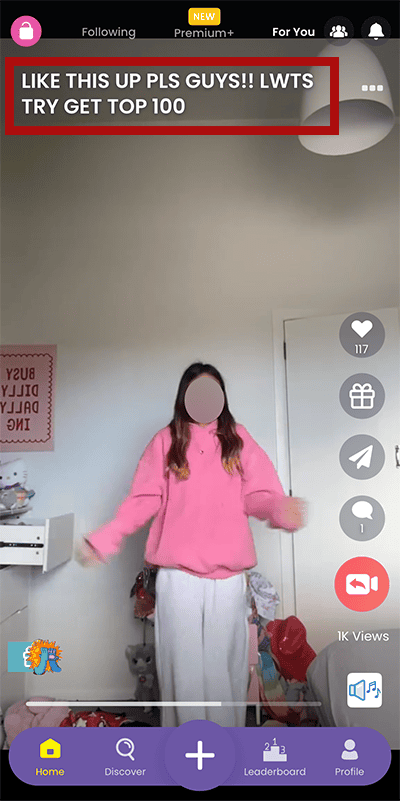
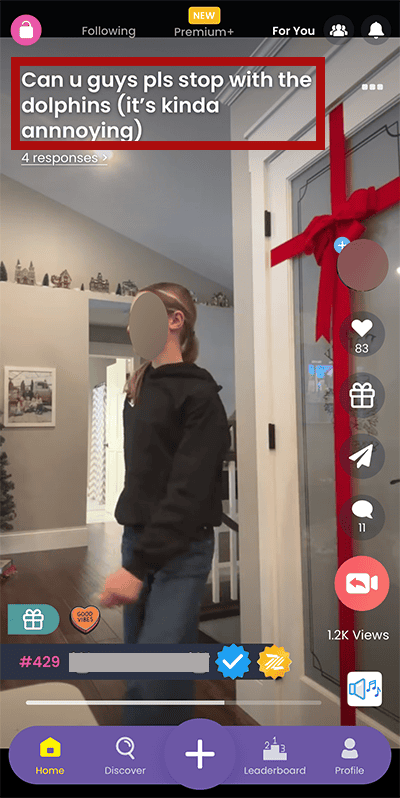
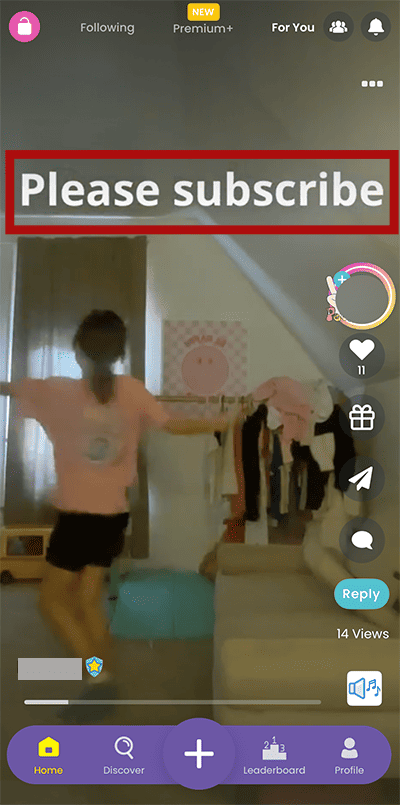
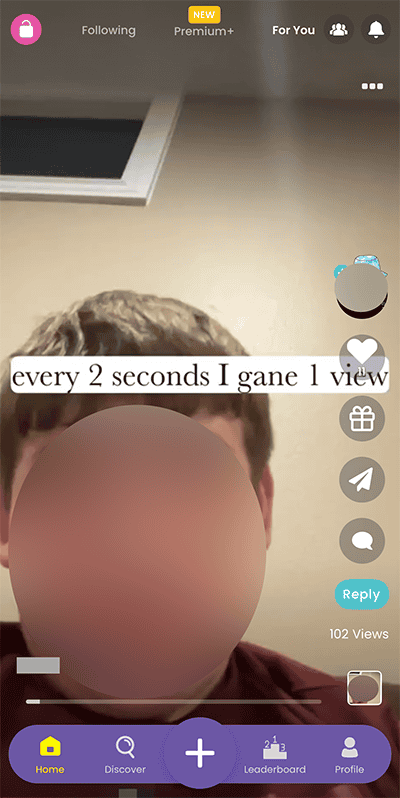
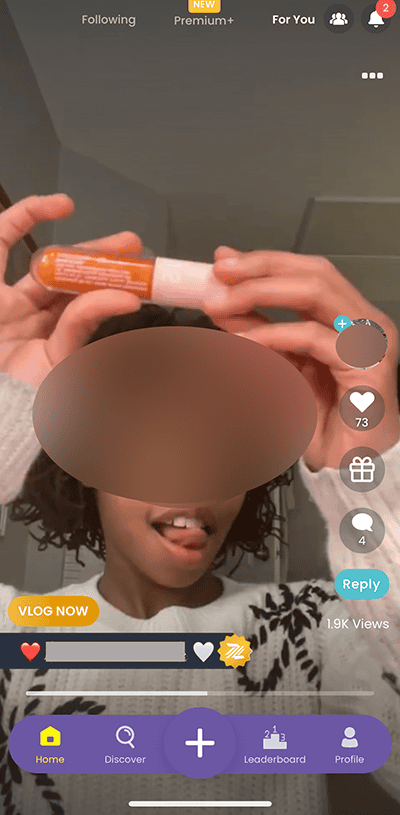
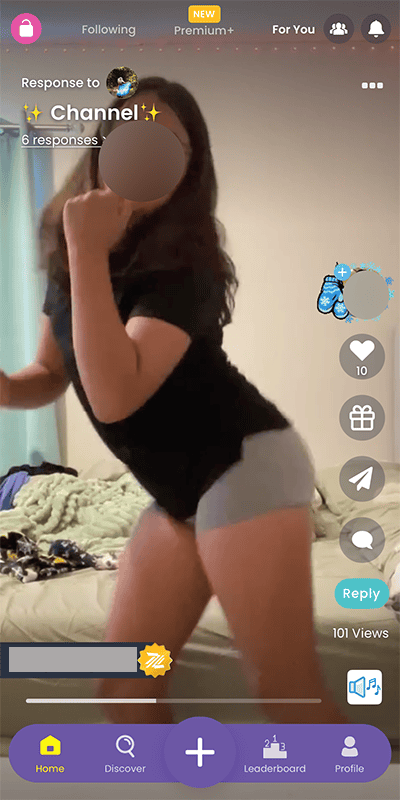
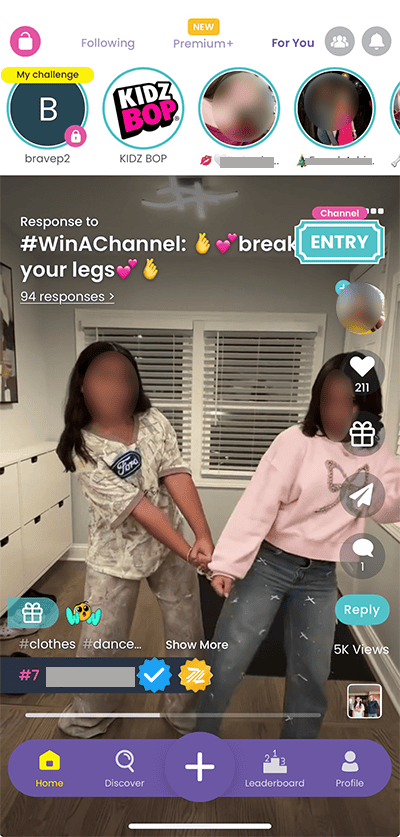
⇒ The app opens to a FOR YOU page where challenges are not obvious. It’s immediately easy to be drawn into an endless scroll of short-form videos of young girls dancing and GRWM vlogs.
Channels
Zigazoo advertises for children to become exclusive content creators on their platform. To be accepted into the “Creator Club,” a user must be picked as the winner of a #CreatorClub challenge to win their own channel.

Benefits include:
- Access to a group of Creator Club members
- Additional Zigazoo tools and features
- Monetization opportunities
- Referral program
- Early access to select challenges and guest videos
Some of the top content creators also have “clubs” that users can pay even more money for exclusive benefits.
Brand Partners
Zigazoo promotes itself as the #1 place to inspire and engage with real kids and families. Their list of partners includes Amazon, NBA, Netflix, Mattel, Nickelodeon, AppleTV+, Scholastic, and Penguin Random House.
Partner benefits include:
- Branded Content Channels
- Media campaigns
- Market intelligence
- Access to Kid Talent
- Product gifting/sampling
- Parent-targeted media
#3 Safety
The Zigazoo website states: “Safety isn’t just a feature – it’s a foundation.” To be sure, the elimination of Direct Messaging and the abundance of human moderation help the platform remain “safe” – but only if “safe” means a diminished presence of predators and bullies.
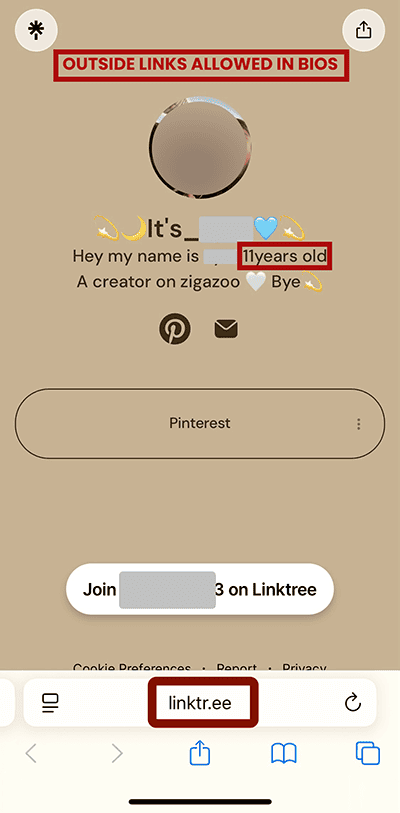
The website boasts of Zigazoo’s robust cybersecurity, kidSAFE, and COPPA compliance, but their age verification and parental consent are woefully lacking. Worse, they assume parental consent in their Terms of Service, which describes what happens to the actual content that is uploaded to the platform – and that is where the concern lies.
⇒ Zigazoo’s Terms of Service grant the company (and all other users) broad, perpetual rights to use, modify, distribute, and “fully exploit” (their exact words) children’s videos. And that includes after an account has been deleted.
Yes, Zigazoo reserves the legal right to distribute the content, share it with partners, sublicense it, or reuse it indefinitely. This is the same terms of service that TikTok and YouTube have regarding ADULT content – which is crazy for a “kid-safe” app.
In addition to those unethical terms of service, the following safety concerns were also found in our research:
1. NO PARENTAL CONSENT NEEDED TO CREATE ACCOUNT OR CONSUME CONTENT
We created accounts for an 8-year-old and a 13-year-old, neither of which required email verification before we could begin scrolling through the FOR YOU page of recommended videos.
Early online reviews of the Zigazoo app noted a requirement for a picture to verify identity and “robust” age verification, but this has since been removed.
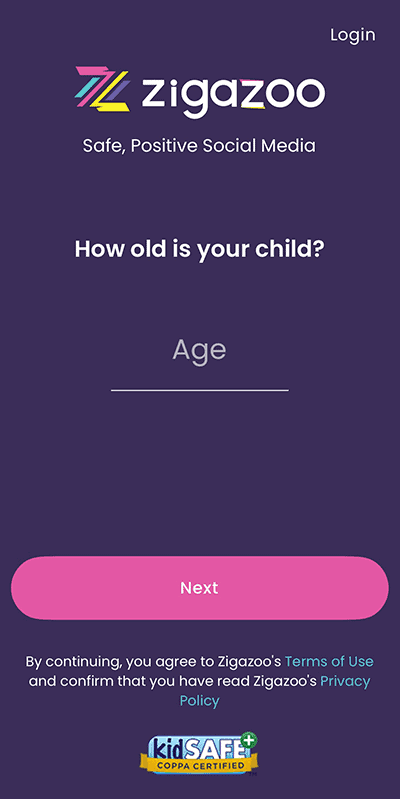
2. ONE SIMPLE MULTIPLICATION QUESTION SERVES AS PARENTAL VERIFICATION TO SUBSCRIBE
Our 8-year-old account signed up for the Premium membership’s 7-day trial. The only additional step was a multiple-choice math question labeled “Parents only!” Certainly, they must realize that kids have phones and iPads with calculators, even if they don’t recall what 4×8 equals, they can figure it out.
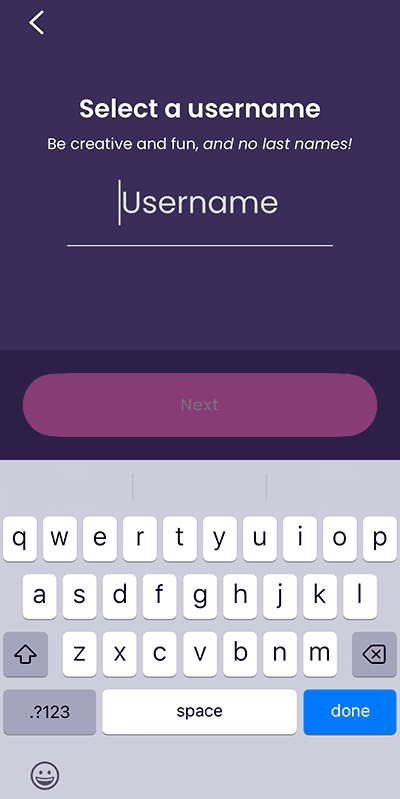
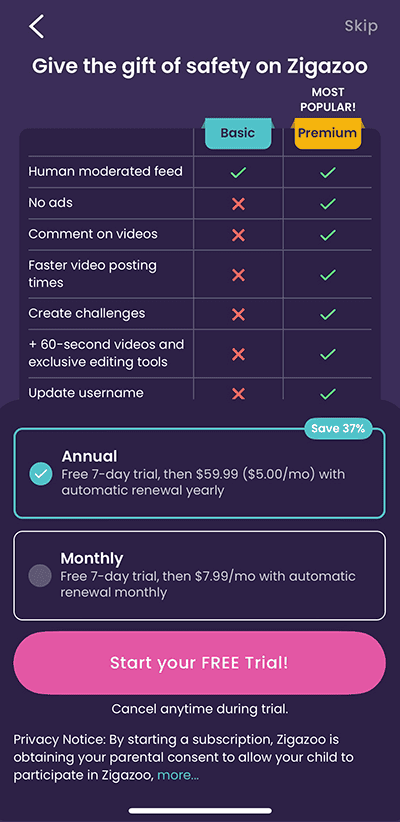
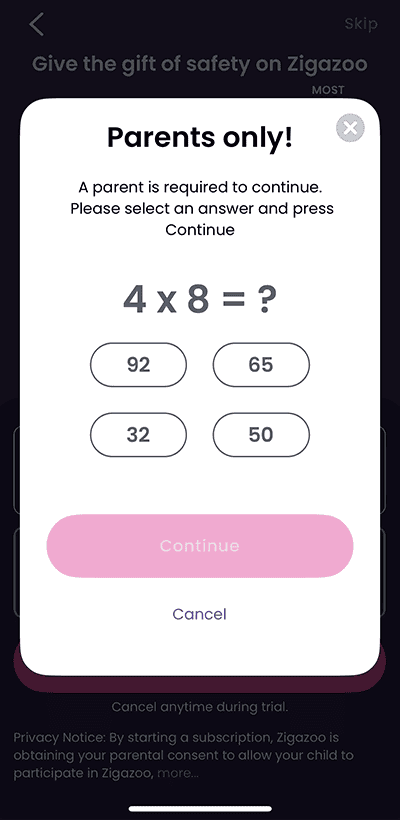
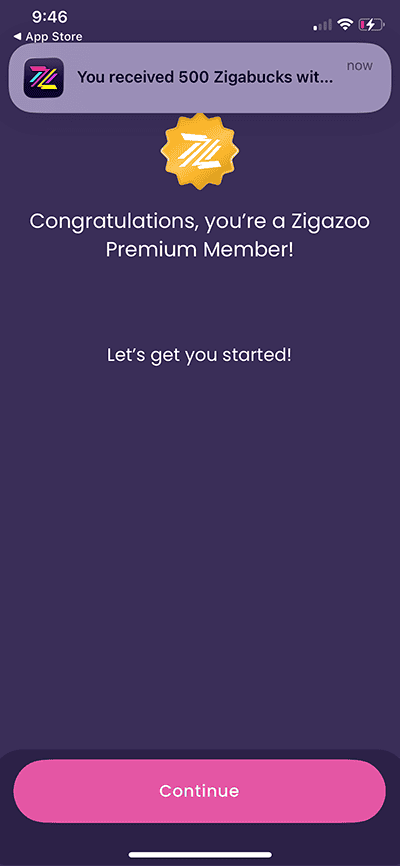
3. VIDEOS CAN BE DOWNLOADED OR SHARED BY DEFAULT
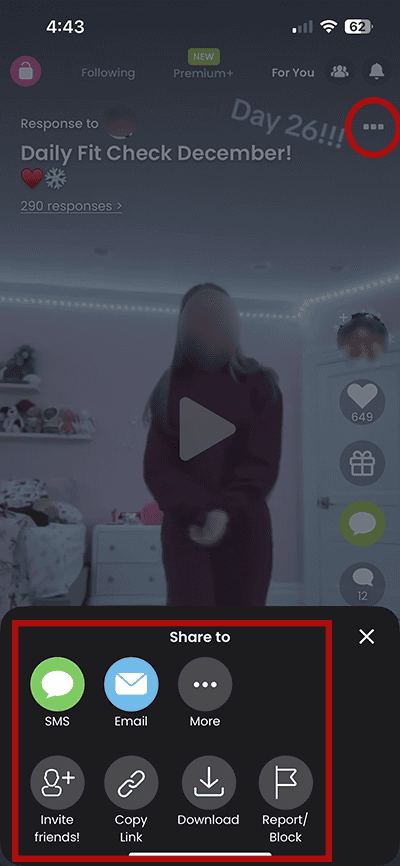
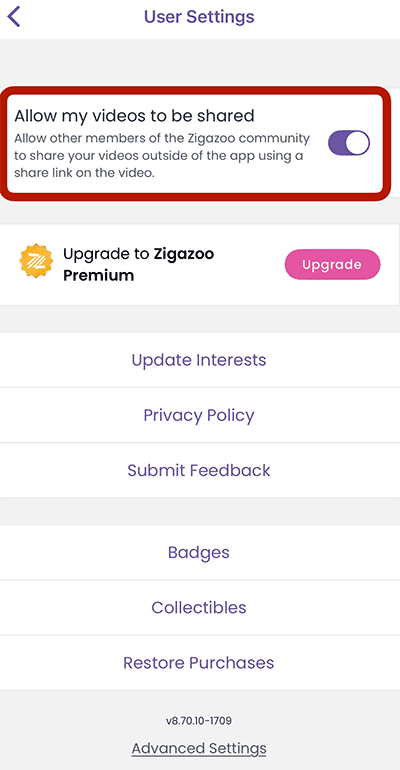
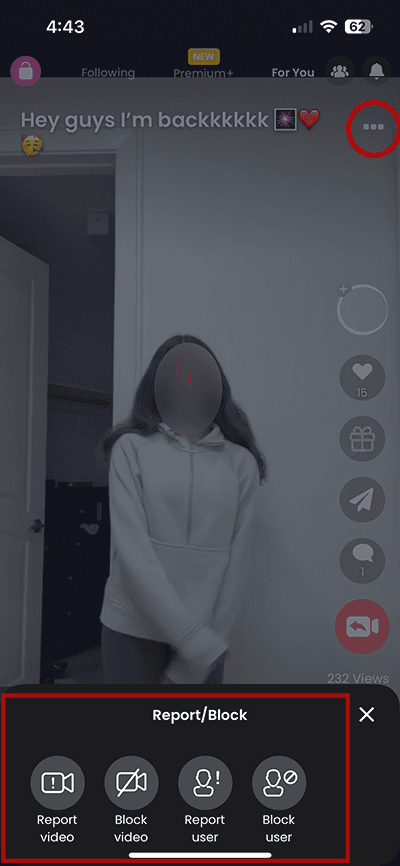
Perhaps the most disturbing feature of the app is the ability to freely share any/all content. By tapping the three dots in the upper right, users can text, email, copy the link, or download any video (below left). Unless the user turns this feature off under profile settings (below middle and right), the default is full share.
4. TEXT COMMENTS ARE ALLOWED
Originally, comments were only in the form of ‘stickers’ or video responses. Recently, text comments have been allowed. One per day for non-subscribers and unlimited comments for subscribers.
Although they claim human moderation of videos, it is unclear what type of comment moderation is used. We found videos of girls crying, asking why everyone had to be so rude and mean in the comments. Obviously, some bullying or judgment is occurring and getting through their moderation.
5. NO OPTION TO MAKE VIDEOS PRIVATE
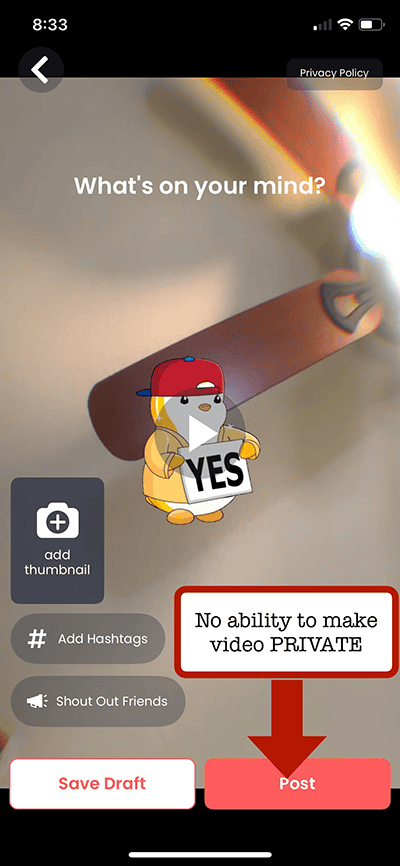
Once again, early reviews of the app highlight the user’s ability to make videos private or public before posting.
When we attempted to post a video on our 8-year-old test account (yes, of a ceiling fan), this option was not available. Our video was published immediately.
6. PARENT VERIFICATION ONLY REQUESTED TO BUY/TRADE NFTs
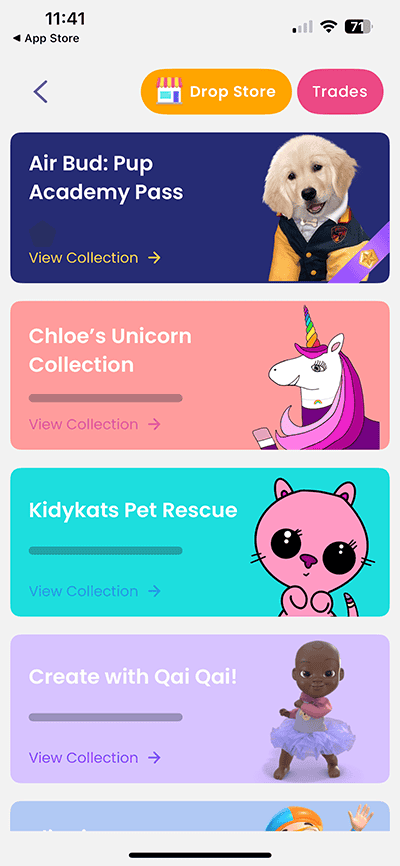
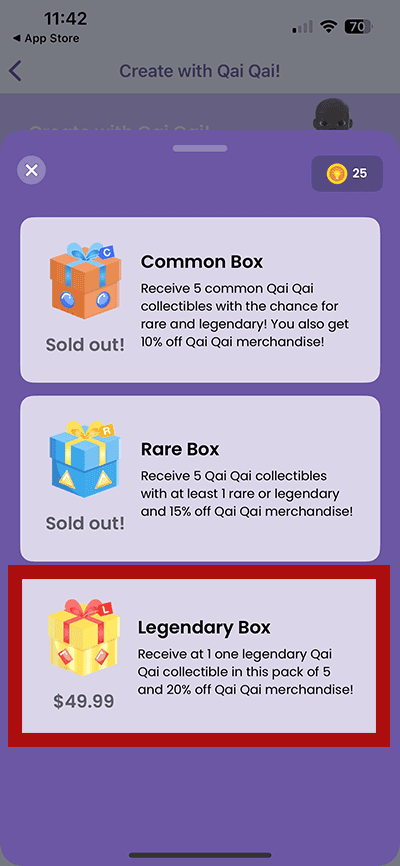
Zigazoo added Non-Fungible Tokens (NFTs) in 2022. Users can purchase (with real money) and trade unique digital art. When we tapped the $49.99 Legendary Box, this was the first time we were asked to provide parent verification.

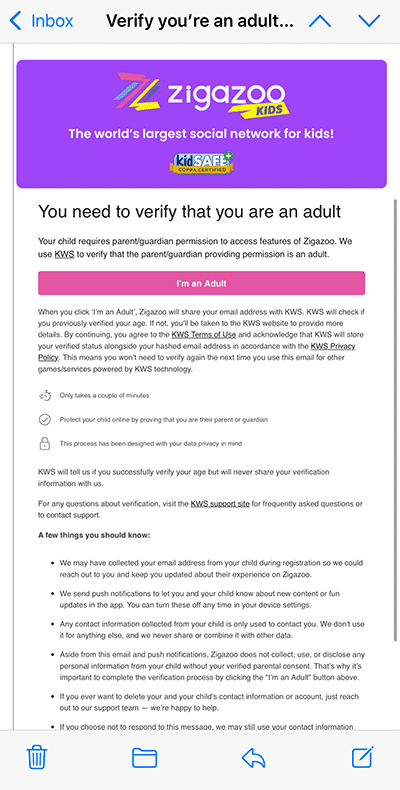
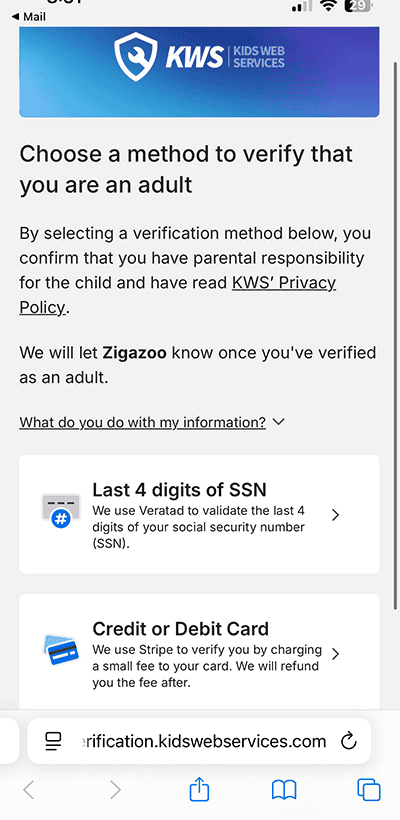
The app offers verification through a (1) photo with a parent, (2) an upgraded subscription from Premium to Premium+, (3) the last 4 digits of SSN, or (4) a credit or Debit card.
Even then, the app offers a “Nevermind, maybe later” option so kids can continue using the rest of the app without parent verification.
#4 Educational?
⇒ If there are any remnants of “education” left on Zigazoo, we could not find them.
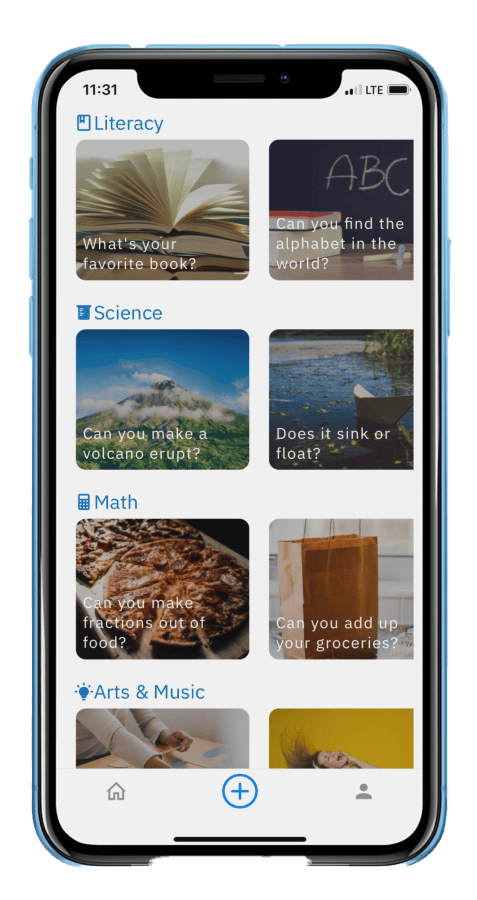
Back in the app’s early days, articles highlighted its educational features. A TechCrunch article from June 2020 stated, “Kids can answer short video-based exercises through video and share responses with friends. Exercises range from how to create a baking soda volcano to making fractions out of food, and target kids from preschool to middle school.”
Even now, many app review sites for parents, such as Common Sense Media, Protect Young Eyes, Bark, and Bright Canary, detail how the app’s challenges are “simple investigative or creative projects” and that “project ideas are posted by third-party creators such as zoos and children’s museums.”
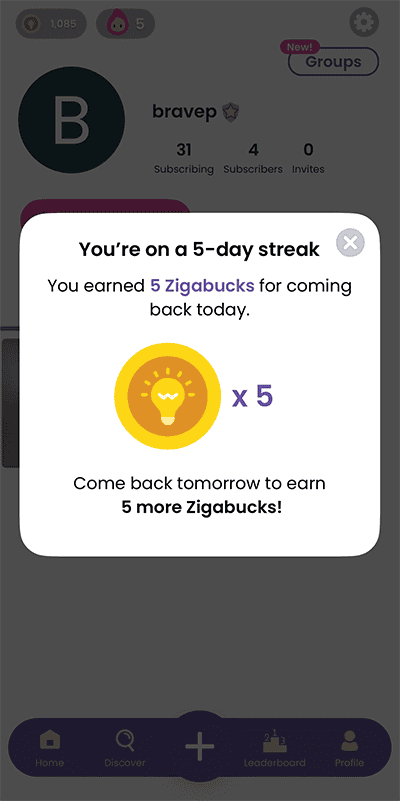
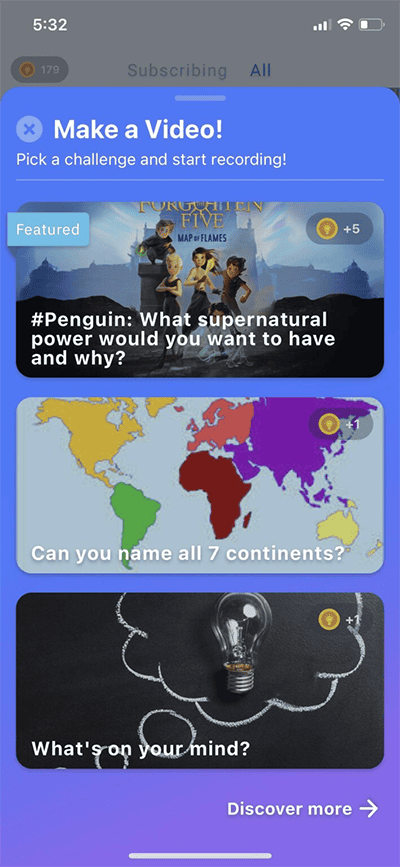
So, clearly, at one point, the app leaned towards educational engagement. Today, that is not the case. ⇒ Now it is about getting views, gaining followers, viral dances, and making it onto the Leaderboard.
To prove this, compare the screenshots from news articles over the years to today.
Left: 2020 TechCrunch Middle: 2022 Refresh Miami Right: BP test account Jan 2026
Celebrity Reads
The website promotes “Celebrity Reads” as a main feature, but it’s not obvious or easy to find inside the app. In fact, we finally found it under “Discover” after scrolling past trending sounds, giveaways, GRWM, Vlogs, Lip Sync, Dance Tutorials, Self-Care, Gaming, Sports, Express Yourself, CreatorU, Community Challenges… and then, finally: “Celebrity Guests.”


While some celebrities do read a book, others don’t – they hold a book and ask a question meant to serve as a “challenge” for kids to respond to.
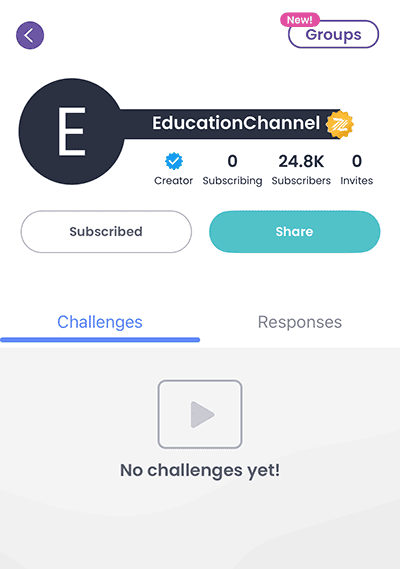
Education Channel
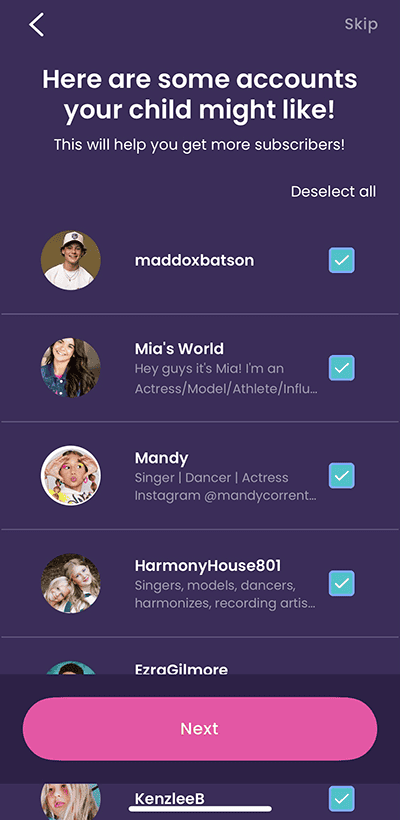
The lack of educational content on Zigazoo is easily summarized by the “Education Channel” it recommended we subscribe to when we created our test account. It has 24.8K subscribers and ZERO content.
#5 Rating, Recommendation & Biblical Perspective
Apple App Store: 4+ (made for ages 9-11)
Google Play: Everyone
Zigazoo: with Parental Approval
Brave Parenting: NOT RECOMMENDED
We could probably list 100 reasons not to allow your children on Zigazoo.
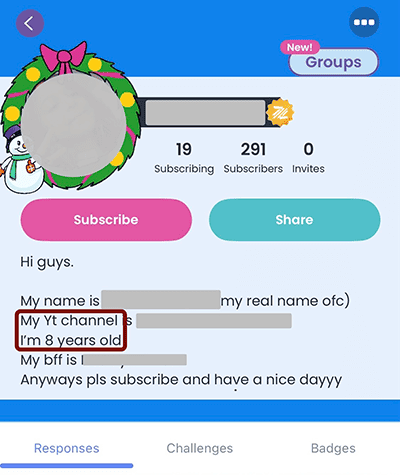
We’ve highlighted the duplicity of their evolution a bit, beginning as an educational app for young kids to engage with, and becoming a TikTok-style platform that encourages kids to pursue virality, subscribers, fame, and worth by exploiting their childhood bodies and lives for public consumption.
Still, we recognize some parents desire their children to be platformed, internet-famous, and commercialized. Other parents just want to be supportive of their child’s desire to be a content creator. For them, the safety concerns and lack of educational content are negligible.
Regardless of the motivation, there is a deeper concern that all parents – Christian or not – must consider: humans are not meant to be idolized and rarely can we handle fame without significant consequence. Think about how many child celebrities lose themselves in drugs, alcohol, despair, delusion, and regret. The same is already proving true for many adult and child internet stars. Research has demonstrated that children who spend a lot of time on social media suffer from greater anxiety and psychological stress.
Why? Because life is not about you (or any of us), but when we are worshipped, we begin to believe we are the center of the universe. And that is more pressure than any human can handle.
Biblical Perspective
Let’s examine the idolization (worship) of humans through the lens of Scripture.
Scripture provides the most foundational principle for worship: “You shall have no other gods before me” (Exodus 20:3). Jesus reiterates this principle in the gospels, notably when tempted by Satan to worship him, “It is written: ‘You shall worship the Lord your God only and him only shall you serve” (Matthew 4:10, Luke 4:8).
But the worship of fellow man is an easy snare to fall into. Paul wrote to the church in Rome, describing how the wrath of God will be revealed against all unrighteousness. His prime example is how “They exchanged the truth about God for a lie, and worshiped and served created things rather than the Creator—who is forever praised. (Romans 1:25).
John asked, “How can you believe since you accept glory from one another but do not seek the glory that comes from the only God?” (John 5:44).
This is why Paul encouraged believers through his own self-reflection to examine their motives. “Am I now trying to win the approval of human beings, or of God? Or am I trying to please people?” (Galatians 1:10).
Followers of Christ are not to seek the worship of others nor accept it.
In the book of Acts, Cornelius fell down at the Apostle Peter’s feet to worship him. “But Peter lifted him up, saying, “Stand up; I too am a man” (Acts 10:26).
In Revelation, an angel twice prevents the Apostle John from worshipping him, reiterating that only God is worthy of worship. “But he said to me, ‘You must not do that! I am a fellow servant with you and your brothers the prophets, and with those who keep the words of this book. Worship God.'” (Revelation 22:9).
But social media platforms encourage this precise behavior.
And when a social media platform is targeted at young children, they are taught (discipled) to pursue worship from others from an early age. Gaining followers or subscribers and reaching the top of the “Leaderboard” is the foundational purpose of Zigazoo. Naturally, kids on Zigazoo will search for the approval and worship of others. This behavior becomes embedded in their worldview, their worth, and their work.
Paul admonishes believers to “do nothing out of selfish ambition or vain conceit. Rather, in humility value others above yourselves” (Philippians 2:3), but social media requires users to do the exact opposite.
Apps like Zigazoo encourage selfish ambition and valuing self above others as a way of life. The idea that your life is content that everyone should want to consume. What makes Zigazoo worse than TikTok or Instagram is that they promote it at such young ages. Tender ages when they should be humble and innocent.
Humility is what defines childhood and childlike faith.
Why did Jesus rebuke the Pharisees and religious leaders so strongly? Because they lacked humility. They believed they were better than other Jews; that their piousness and devotion to the law made them worthy of worship, covetousness, and power.
Jesus said to them, “Truly I tell you, unless you change and become like little children, you will never enter the kingdom of heaven” (Matthew 18:3) and “Truly I tell you, anyone who will not receive the kingdom of God like a little child will never enter it” (Mark 10:15). Humility is the key.
Allowing a child to post their life as content, to garner fans and subscribers, and to hustle their way to the top of a Leaderboard strips them of humility and innocence. It robs them of the childlike faith that Christ desires and delineates as a necessary virtue for rebirth into the kingdom of God.
Yet, hustling to the top of the Leaderboard is not a new sin.
Matthew 18 describes how the disciples were concerned about who was at the top of the “leaderboard” in heaven. They asked Jesus, “Who, then, is the greatest in the kingdom of heaven?” (v. 1).
“He called a little child to him, and placed the child among them. And he said: “Truly I tell you, unless you change and become like little children, you will never enter the kingdom of heaven. Therefore, whoever takes the lowly position of this child is the greatest in the kingdom of heaven” (vv. 2-4).
Not only does Jesus extol the beauty of childhood innocence and faith, but he also issues stern warnings to anyone who would cause a child (or any humble believer) to stumble.
“If anyone causes one of these little ones—those who believe in me—to stumble, it would be better for them to have a large millstone hung around their neck and to be drowned in the depths of the sea. Woe to the world because of the things that cause people to stumble! Such things must come, but woe to the person through whom they come!” (vv. 6-7)
Woe to anyone who knowingly allows children to be robbed of childlike humility in the search for fame and fans while making Big Tech execs rich off of child exploitation.
A final glimpse into the disturbing world of Zigazoo