
Kalshi is a prediction market app for adults over 18. It has been in the top Free Apps of Apple’s App Store for over two years.
Here are 5 Facts about Kalshi every parent needs to know!
#1 How Kalshi Works
Kalshi works by allowing users to purchase “yes” or “no” contracts on whether real-world events will happen. These events can be sports, elections, economics, weather, entertainment, and much more.
Kalshi describes this as “trading” rather than betting. Users trade predictions with one another via contracts, rather than playing against “the house” as in casinos and traditional sportsbooks.
A contract is not a share of a business, unlike buying Apple stock. The contract reflects a financial position contingent on whether a specified event occurs.
Contracts are priced between $0.01 and $0.99. The price reflects what the crowd thinks the odds are. If a “yes” contract costs $0.75, it means the market roughly estimates a 75% chance that event will occur.
If you buy a “yes” contract that it will rain in Seattle and you are right, the contract settles at $1.00 per share (making you $0.25/share). If you are wrong, it settles at $0.00, and you lose what you paid.
Kalshi makes a profit by charging transaction and settlement fees.
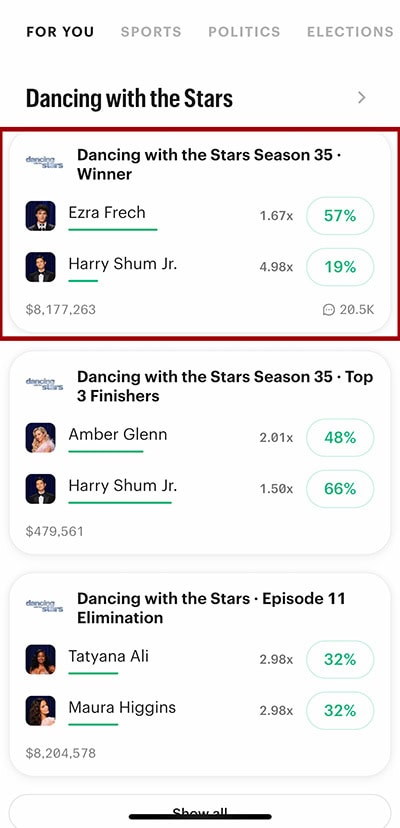
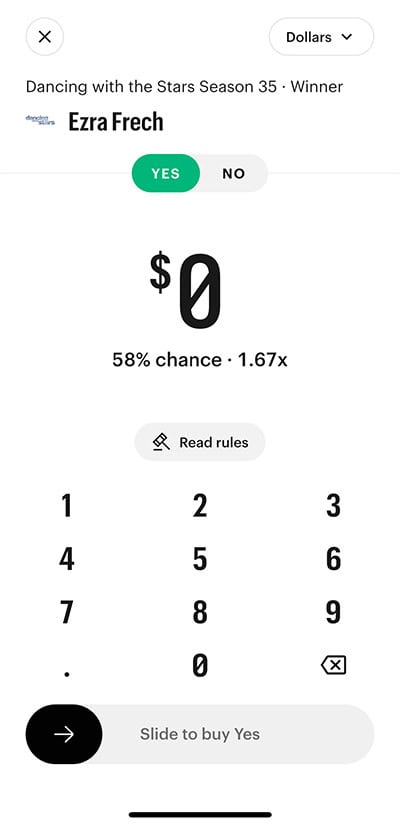
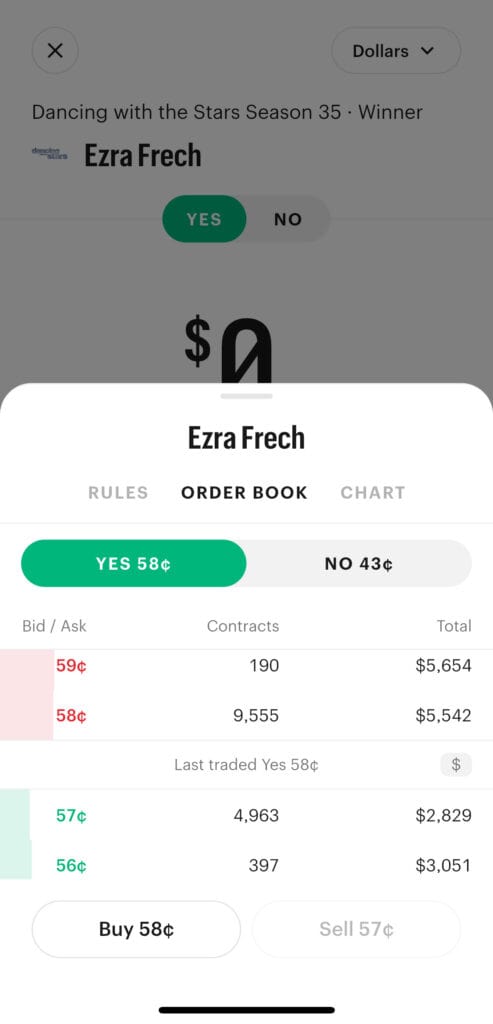
The user interface is straightforward enough to make participation seem simple.
#2 18+ But Minors Find a Way
Kalshi requires users to be at least 18 and undergo identity verification.
Currently, state legal gambling ages do not apply to Kalshi (although this is being debated in court) because it distinguishes between buying and selling contracts rather than betting against the house. Instead, Kalshi operates under federal rules for financial exchanges.
With mounting concern about minors on the platforms, Kalshi amped up its age verification in 2026.
During our test account setup, after two-factor authentication, we were required to provide our address, the last 4 digits of SSN, the full SSN, and submit a photo of government-issued ID. As secure as this seems, the age restrictions are not foolproof when minors use their parents’ or older siblings’ identities to create accounts.
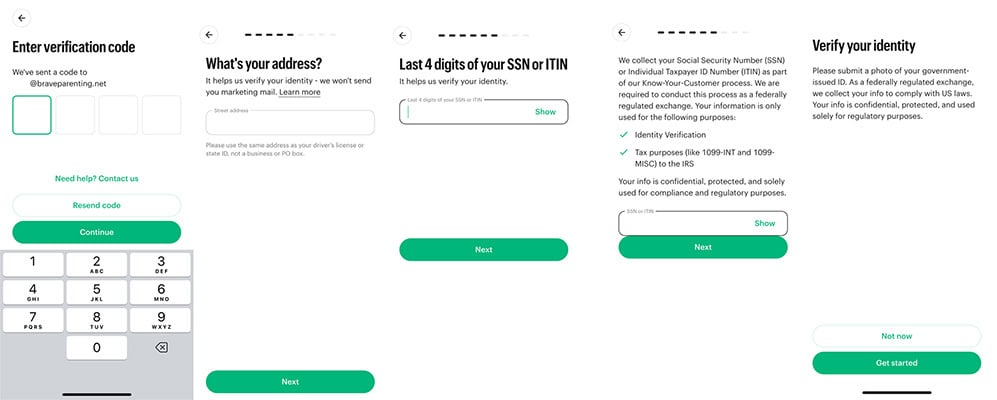
Recognizing that motivated minors can find a way onto the platform, Kalshi introduced additional protection, including the ID check tool. In October 2026, the company announced further protections for young adults ages 18-20. These young traders now have a default $2,500 deposit limit and are prompted with proactive activity management instructions after their first trade.
Parents and other adults who have concerns that their ID may have been used to create an account can use Kalshi’s ID CHECK.
#3 Speculation? Investing? Money Hack?
What’s happening on Kalshi is speculation: taking a financial position on uncertain outcomes. For young people, many of whom receive their financial education on TikTok, this is often presented (or, at least, interpreted) as investing. Even worse, in many Kalshi-sponsored TikTok ads, it is presented as a quick way to get paid – a money hack.
But speculation and money hacks are not the same as investing. Investing is putting your money into assets such as stocks, bonds, or real estate, with the expectation that they will grow and generate profits over time.
Kalshi doesn’t spend time publicly rejecting the notion that its prediction market is investing. They do, however, spend their time defending against the claims of gambling. In response to one article, they argued that Kalshi is “fairer and less predatory than gambling” since its revenue doesn’t come from bets against a ‘house.’
So, let’s define gambling then. Gambling is risking something of value on an uncertain outcome in hopes of winning a prize or financial gain. And…speculation, again, is taking a financial position on uncertain outcomes.
Obviously, speculation/prediction and gambling become very blurred on Kalshi. The fact that Kalshi is regulated by the Commodity Futures Trading Commission and categorized as “Finance” on the App Store doesn’t settle the question of its close resemblance to gambling.
And as for feeling like an investment, there are no long-term returns or assets in who gets voted off the reality show, wins the football game, or if it snows this Thursday.
#4 Compulsive Trading, Financial Losses, and Excessive Screen Time
Kalshi is more than a financial exchange company with an app. Kalshi combines the variable rewards associated with gambling with the constant engagement of financial trading apps. The anticipation of winning, the disappointment of losing, and the desire to recover losses can lead to compulsive participation.
Kalshi also incorporates social features so users feel connected (at best) or in competition and comparison with (at worst).
Consider the following design features that contribute to compulsive trading, financial loss, and excessive screen time.
- Users have 24/7 access to trading
- Seemingly endless supply of topics to “predict.”
- Frames trading as “forecasting,” “data analysis,” and skill-based research rather than chance
- Frictionless digital spending
- Event contracts can resolve in minutes, hours, or days
- Visual stimulation with flashing green and red price lines
- Real-time probability shifts and running logs create FOMO
- Low barrier to entry with contracts starting at $0.01
- Social features of Feed, Followers, Following, and both private and public chat
- Public Leaderboard
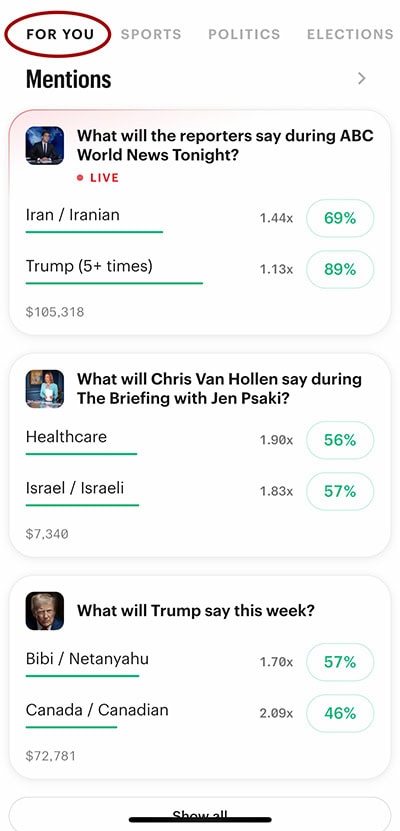
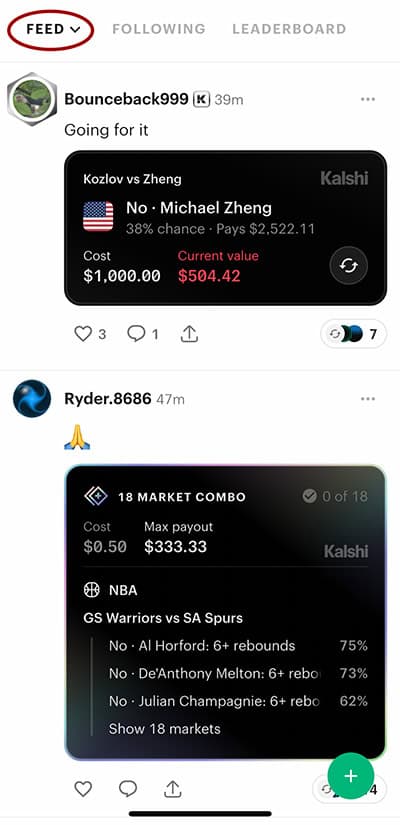

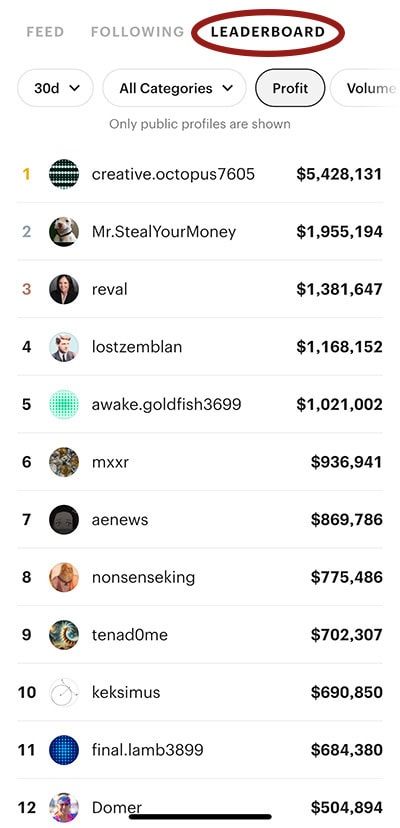
The smartphone has transformed gambling (and prediction markets). What once required physically going to a casino, racetrack, or lottery kiosk is now available in our back pockets. In the same way the smartphone made p*rnography a problem for minors, it has made gambling (and prediction markets) a problem for minors.
For children and teens, private, portable, always-available online access removes natural barriers that once limited their exposure to harmful activities.
#5 Rating, Review, & Biblical Perspective
Kalshi: 18+
App Store: 18+
Google Play: Adults Only 18+
Brave Parenting: Not Recommended
There is no reason for parents to permit children under 18 to use Kalshi. Even if a parent has an account on Kalshi, there is no practical benefit to teaching your teen how you use Kalshi or to having them aid in the parent’s predictions.
Because “gambling” is now so accessible through sports betting apps and prediction markets, it is not a topic that can be ignored. Parents must directly address how gambling/betting/predicting can be addictive and lead to great financial loss. When you see advertisements (because they are everywhere), talk about it. Teens need a moral, legal, and biblical framework to understand this growing trend. They will not get that from their friends or TikTok; it must come from you.
Warning signs of a gambling disorder parents should recognize:
- Frequently checking markets, probabilities, or sporting-event outcomes
- Talking about winning money as an easy side-hustle or as investing
- Borrowing/Stealing money, or concealing financial transactions
- Becoming unusually anxious, frustrated, or preoccupied after a loss
- Neglecting schoolwork, relationships, responsibilities, or sleep to monitor predictions
Biblical Perspective
A common underlying motivation for minor-aged teens to use Kalshi is fast, easy money. After all, this is what the marketing sells them.
Teens are encouraged to pursue money without the work and virtue of earning it.
While Scripture doesn’t explicitly prohibit investing and responsible financial risk-taking, it repeatedly commends diligence, responsibility, patience, generosity, contentment, and wise stewardship. God’s word does provide strong warnings about the pursuit and love of money and being mastered by our desires.
Dishonest money dwindles away, but whoever gathers money little by little makes it grow. Proverbs 13:11
The plans of the diligent lead to profit as surely as haste leads to poverty. Proverbs 21:5
Those who want to get rich fall into temptation and a trap and into many foolish and harmful desires that plunge people into ruin and destruction. For the love of money is a root of all kinds of evil. Some people, eager for money, have wandered from the faith and pierced themselves with many griefs. 1 Timothy 6:9-10
Scripture contrasts quick money with the steady accumulation of wealth that comes with diligent planning. Kalshi can be both a temptation and a trap for young people growing up with a desire to consume more of what the world offers, without working to afford it.
While a parent may be convinced they are developing probability skills or financial knowledge – or even that their teen is just ‘having fun,’ those benefits must be weighed against the potential for cultivating unhealthy habits, desires, and virtues.
If a teen spends 4 hours working a job, studying, serving others, or developing a skill, what type of character would be cultivated?
If a teen spends 4 hours considering predictions, watching odds, following others’ winnings, and hoping to win money from an uncertain outcome, what character does this time cultivate?
The question that Christian parents must consider isn’t only about losing money; it’s about what the activity teaches them to love, pursue, and value.