
GroupMe is a free group-messaging platform owned by Microsoft.
Parents often allow GroupMe so their children can coordinate sports teams, extracurricular activities, clubs, and church groups because the group is led by a coach, teacher, or youth leader.
Here are 5 Facts about GroupMe every parent needs to know:
#1 Group messaging
GroupMe is designed to make group messaging easy. Regardless of which phone you have (iPhone, Android, or no phone – only a home computer), teams can coordinate practices, clubs can organize meetings, youth pastors can communicate student activities, and parents can plan activities. The platform operates through an app or browser.
GroupMe allows for group messaging with up to 5,000 members. One person creates a group and invites others to join using a phone number, username, QR code, or shared link.
Once a member of a group, users can send text messages and DMs, and share photos, videos, GIFs, memes, polls, events, and links. Users can also share locations in a group.
A recently added feature is Vanishing Groups, time-limited groups that delete all messages so “all that’s left is a memory.”
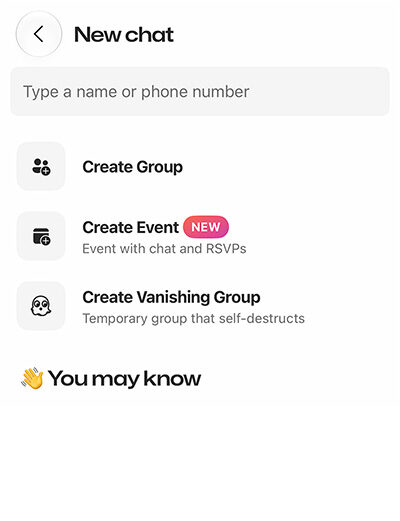
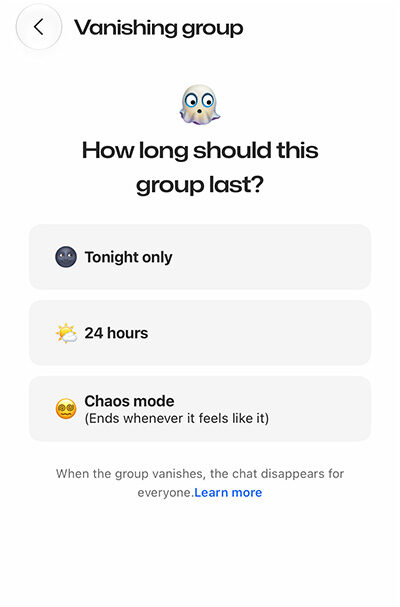
PARENTS NOTE: Once in a GroupMe group, a child has full access to the entire communication landscape…keep reading…
#2 Copilot AI in GroupMe
In 2025, Microsoft revitalized GroupMe to include its generative AI model, Copilot.
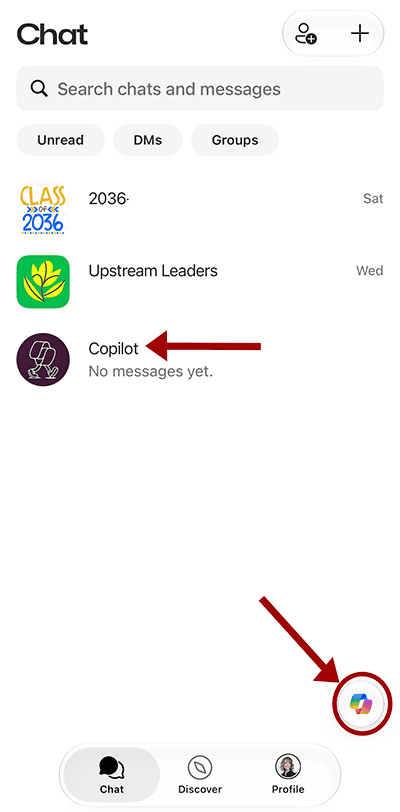 Users can access Copilot directly from the home Chat page for a private chat with the AI assistant, or summon Copilot in a group chat.
In any GroupMe chat, you can tag @copilot and ask the tool to generate an image, to help make plans, clarify facts, or contribute to the discussion.
In a GroupMe blog post announcing this feature, they say, “Group Copilot is your group’s lowkey, always ready AI companion. Whether you are planning something, solving something, or just trying to win a meme war, you can tag Copilot to jump in when you need a hand….Copilot is like the friend who doesn’t talk much but always shows up with the perfect answer, idea, or image when you need it.”
Alternatively, GroupMe has Mico, an experimental AI that “hangs with the group” to participate in meaningful ways. Once added to a group, Mico can see everything happening in the group and respond in real time. Microsoft says, “Mico is an AI designed with personality and memory for group dynamics. Mico doesn’t wait for commands; it participates, remembers, and adapts to the vibe of the group.”
#3 Private messaging
One of the biggest concerns surrounding GroupMe is how easy a child can move from a group conversation to a private message.
Any user can open a group member’s profile and initiate a direct message (DM). The recipient can accept, delete, block, or report the message request. Any media from unaccepted messages is blurred by default, but can be viewed by simply tapping it.
The ability to private message opens the door for unwanted contact, bullying, sexual content, manipulation, and conversations between minors and adults.
GroupMe also allows users to archive chats, delete DMs, and clear local chat history, making it easy for children to hide any evidence of impropriety.
#4 Discovery beyond necessary groups
GroupMe offers easy ways for users to connect with others outside the original group(s) that brought them to the platform.
DISCOVER allows users to search for groups, join your school (designed for colleges), or find trending or category-specific groups (gaming, music, memes, sports, random, or nearby). Depending on the group’s settings, a user may join immediately or require approval.
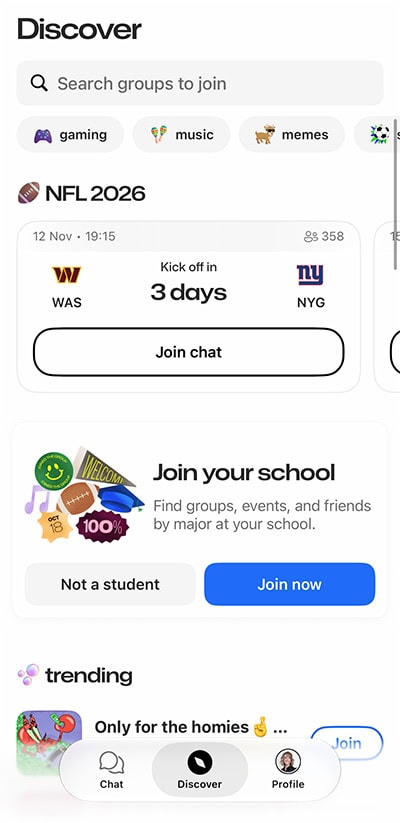

Once a member of another group, users are easily accessible to strangers outside their physically connected and supervised world. This is where DMs from strangers are of particular concern.
Groups can also get out of hand when GroupMe links/QR codes are shared on social media platforms. Remember, GroupMe allows for up to 5,000 members.
#5 Rating, Review, & Biblical Perspective
GroupMe: 13+
App Store: 13+
Google Play: T (Teen)
Brave Parenting: 16+
GroupMe serves a legitimate purpose: connecting and communicating with a group of people. The platform, however, lacks critical parental controls and provides numerous opportunities for kids to find trouble.
Copilot access provides direct access to an AI chatbot to discuss anything: homework, life advice, romance, or suicide.
- GroupMe settings only provide a toggle ON/OFF for Copilot, which can easily be toggled back on by a child
GroupMe allows children to connect privately with strangers, including sharing images, videos, and location.
- GroupMe settings do not offer a parent-managed setting that disables DMs
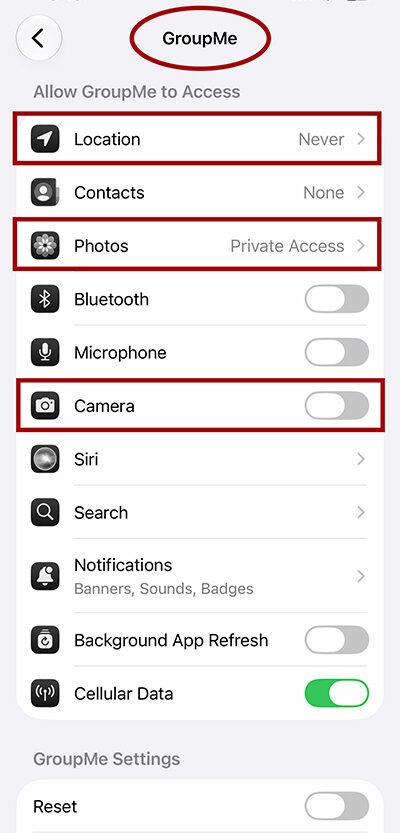
- The phone’s App Settings allow disabling sharing of Location, Contacts, and Photos, as well as access to the Camera. You must also disable the ability to change these settings:
- Apple: Settings > Screen Time > Content & Privacy Restrictions > Allow Changes to > Accounts > Don’t Allow
- Android: Family Link App > Select Child > Controls > Signed-in Devices > Select child’s Android Device > App Permissions > Location > Only Parents (this applies to all apps, not just GroupMe)
In a culture where kids are more isolated and supervised than ever, their desire to connect and communicate with anyone makes an app like GroupMe risky. This is especially true with younger teens, who often lack the awareness of risk and self-control to avoid it.
Our recommendation of 16 and older is also made with deep concern for direct access to the Copilot chatbot. AI chatbots can easily deceive people (regardless of age). They are an easy way to outsource learning and true human relationships. We believe a teen must be of age and maturity to understand the risks and temptations of AI.
For children under 16 who have a need to join GroupMe for their team, club, or church group, we recommend that the parent have GroupMe, be a participant in the group, and allow the child to interact with the group in the presence of the parent.
Biblical Perspective
While there is nothing wrong with organizing a group, discussing homework, or communicating with friends through technology, we can recognize it is not as fruitful as embodied, face-to-face, life-on-life connection and communication.
In the case of GroupMe, the app now offers more than just communication with others through technology; it offers communication with technology itself. The addition of a chatbot changes the game.
This requires Christian parents to carefully consider what kinds of relationships their children’s technology cultivates, who is influencing them, and whether their digital communication encourages godly character.
A child who lacks security and identity in Christ can search those needs out from strangers on GroupMe. A child who struggles to make friends may find refuge and confidence in the anonymity of Copilot.
This is of great concern because God created us for relationships, community, and fellowship – all of which take time, practice, and virtue. Technology can facilitate those relationships, but it can never replace them. The addition of Copilot is an encouraging push to replace them.
Furthermore, digital communication can never serve as the training ground for an abundant life of deep and meaningful relationships. The training ground must be real-life, face-to-face, life-on-life relationships that begin during childhood.
Parents have the responsibility not only to cultivate relational training but also to discipline the folly bound up in a child’s heart (Prov 22:15). Folly is not to be given private communication. At the same time, recognizing that 1 Corinthians 15:33 warns that bad company corrupts good morals, it is incumbent upon parents to steer their children away from bad company. Sycophantic AI is bad company for a child.
For parents who regularly say no to social media and entertainment apps, it can be tempting to say yes to a communication app like GroupMe. Yet, now that you know what you know, your goal cannot be to be liked for saying yes, but for your children to understand why you are saying no. That is the process of discipleship.