Short-form video platforms continue to shape teen culture, and now, one of the originals has returned. A resurrected version of Vine, called diVine, is slowly emerging.
diVine, however, claims to be something new and different. The diVine app has not been released yet (currently only available at divine.social), but once it does, parents will need to be aware of how it works.
Here is what parents need to know about diVine:
#1 What is diVine?
diVine is a 6-second looping video platform modeled after the original Vine. Let’s first understand Vine.
Vine was initially released in January 2013, and by April of that year, the app had become the most downloaded video-sharing app and had amassed 200 million users. Its concentration of young users enabled the creation of many pop-culture moments and memes (i.e., “What are thoossse?” pointing at someone’s shoes).

The phrase often heard today regarding Instagram was first ascribed to Vine: “Do it for the Vine!” Its parent company, Twitter, shut down the app in 2017 due to competition and monetization struggles.
Now, diVine is resurrecting the 6-second looping videos (along with as many archived original Vine videos as available) in an effort to fight FOR human creativity and AGAINST AI-generated content. It is spearheaded by a man named Rabble, who was an early Twitter employee. diVine is financially backed by former Twitter CEO Jack Dorsey.
diVine boasts that it is part of an activist-driven movement towards digital rights and non-corporation-led social platforms (like Meta-owned Instagram and ByteDance-owned TikTok).
#2 Key Features that Make it Different
On the front end, users will experience 6-second looping videos. On the back end, however, diVine will operate in a fundamentally different way than any other social platform. These features may sound like a foreign language to parents, but it’s important to explain them because this is where many say social platforms are moving.
OPEN SOURCE
diVine is built entirely on open-source software. This means that the code is public – anyone can see it, change it, or create their own version of it. Unlike TikTok, Instagram, or Snapchat, where a single company controls the platform, open source allows an entire community to participate.
DECENTRALIZED
diVine boasts that the platform is built on the Nostr (Notes and Other Stuff Transmitted by Relays) protocol. This means that users do not use a phone number or email to register. Instead, users generate a private/public key pair as their identity. Messages are sent through independent servers (relays), which anyone can run.
This means there is no company controlling the network.
CENSORSHIP RESISTANT
The relay system means that no user or their content can be banned from the network. If one server blocks a user, they can just as easily connect to another.
CHOOSE YOUR OWN ALGORITHM
diVine does not impose a corporate algorithm as TikTok and Instagram do. They offer multiple feed algorithms that users can choose from (i.e., Discovery: all recent videos; Trending: most popular videos by engagement). Soon, they plan to offer custom algorithms.
PROOFMODE AUTHENTICITY
This feature ensures no “AI slop” is posted. This software can prove a video was captured on a real device’s camera, the approximate time it was recorded, and whether the video was altered or edited after capture.
PUBLIC VIDEOS & PRIVATE MESSAGES
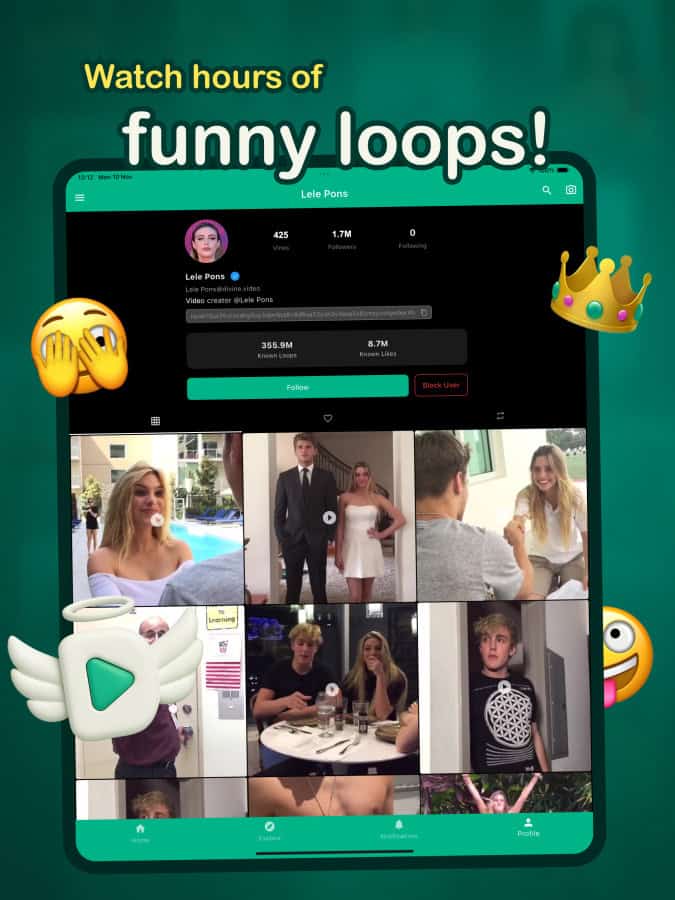
Every video posted on diVine is public. There are no private accounts, and the website states that diVine should not be used for private videos.
Direct Messages, however, are private and end-to-end encrypted (meaning diVine cannot read your messages).
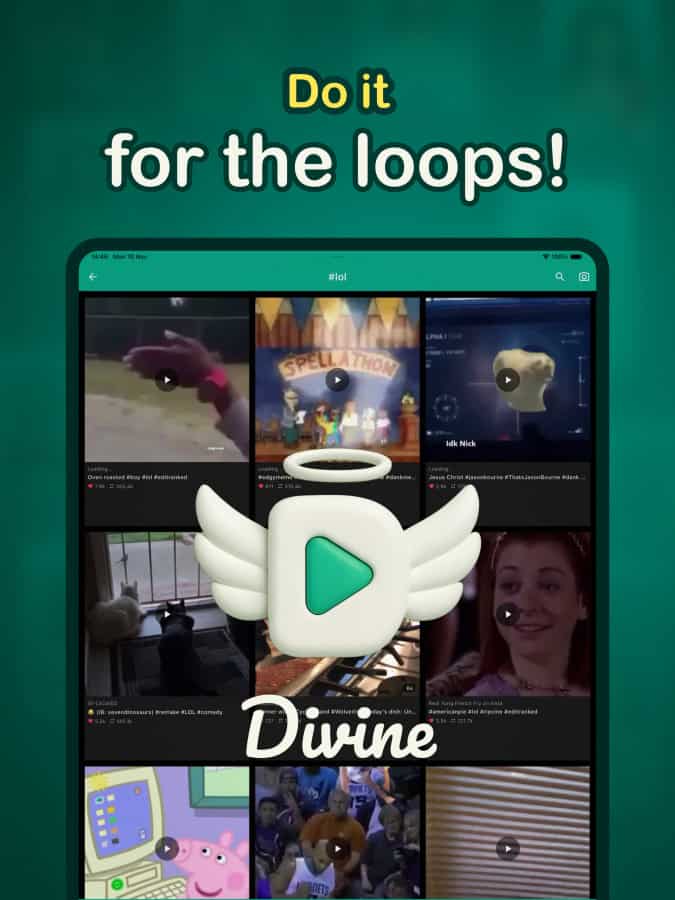
Image Credit: diVine
#3 Why Different Features Are No Better for Kids
Now, let’s explore why these features, while innovative for adults, pose greater risks for children than standard platforms.
No Gatekeepers or Guardrails
- OPEN SOURCE – Anyone can make their own version of the app. This may mean that kids end up using a look-alike version full of explicit content.
- DECENTRALIZED – No centralized company operating the platform means there are no fixed standards, no guaranteed content moderation, and no meaningful guardrails.
- CENSORSHIP RESISTANT – No one can be banned, and harmful, sexual, or violent content can travel freely across relays. No “REPORT” buttons are offered either.
High Exposure
- CHOOSE YOUR ALGORITHM – Kids can choose to go down unhealthy rabbit holes of content.
- PROOFMODE AUTHENTICITY – This doesn’t guarantee truth, protect from comparison, or prevent harmful ideologies from spreading.
- PUBLIC VIDEOS & PRIVATE MESSAGES – Public exposure and private communication are key to predators accessing kids they want to prey upon.
#4 Human Freedom Over Human Flourishing
diVine is built on four core principles to create “social media by humans, for humans.” On the surface, the principles sound good, right, and beautiful. However, each of these principles subtly elevates human autonomy above human flourishing.
(1) Real Cameras, Real Moments
We can get behind this principle, but something fundamentally changes about those real moments when they are publicly posted and can be monetized. The more social sharing is encouraged, the less real reality becomes for those who consume a constant stream of 6-second videos.
What people need are more real moments in real, embodied community that go uncaptured and unmonetized.
(2) Human Expression Matters
diVine states, “Every awkward moment, every genuine laugh, every creative idea—these are what make content worth sharing.”
These human expressions are meant to be shared with others, but not online! They are shared in real life – in the same physical space and time they are expressed. When human expression becomes content to be consumed, it devalues humanity.
(3) Community Over Algorithms
On the surface, yes, community is a priority! But what diVine means is that you own your content and your community (audience/followers), rather than a corporation that employs algorithms.
Community isn’t the embodied relationships that do life together. Community for diVine is a collective of content creators rejecting the corporate data-collection-driven attention economy.
(4) Digital Rights
diVine is part of a broader movement fighting for user control of social media. It’s undeniable that social media, as it stands in the hands of a few Big Tech corporations, is broken and continues to inflict egregious harm to its users. But will user control actually make consuming content any better?
Maybe the problem isn’t who owns the data or controls the algorithm, but the fundamental idea that life should be shared in 6-second snippits of content with people you don’t know.
#5 Rating & Review
Apple App Store: Not available yet
Google Play: Not available yet
diVine.social: 16+
Brave Parenting: Not Recommended
Nostalgia for a time when our lives weren’t bombarded with screens, artificial content, algorithms, and ads is trending. Free-play outside, landline phones, and record players are all making a comeback. But not all things of the past need to be resurrected. A 6-second looping video app is one of them.
First, short-form video apps wire the brain for constant stimulation and immediate gratification. Especially for children, attention, focus, and self-control are detrimentally diminished by consuming TikTok videos, Instagram Reels, YouTube Shorts, and Snapchat Spotlight.
Second, content creation (even if it’s 6 seconds) promotes a self-centered identity. It can be masked with terms like “self-expression,” but the true motivation for posting content of oneself is to be seen, validated, and valued. While those are authentic human needs, one video is not enough to meet them. Competing with a global audience (“community”) for attention requires constant content creation and performance. This, as we have already seen, breeds anxiety, vanity, and pride.
And third, 6-second videos foster shallow creativity. This was what Vine originally offered: edgy pranks, shock content, nonsense one-liners, and social-humiliation videos. Six seconds is not enough time for real creativity, depth, comedy, or storytelling.
Recommendation
There is no obvious reason to allow your child to have access to diVine, whether they are 9 or 16. There are equal dangers on diVine as on any other social media platform. Rarely is there a net gain from early and often access to ANY social platforms.
Brave Parenting recommends that families establish a clear family standard: No short-form video apps. This means the parents as well. These platforms are built for engagement, and adults can fall prey to their algorithms just as much as teens can. Christian parents must live by example, sacrificing their liberties for the sake of discipleship.
This standard removes TikTok, Instagram, Snapchat, YouTube, and now diVine from everyone’s personal devices.
To summarize, Brave Parenting does NOT RECOMMEND diVine due to:
- No safety features
- Public-only posting
- No bans or moderation
- Predators can access kids
- High risk of explicit content
- Short-form consumption erodes attention span
- Encourages performance-based identity and virality-searching behaviors
- Adds one more addictive stream of low-value content
Biblical Considerations
There are plenty of non-biblical reasons to avoid apps like diVine. As Christians, however, we must be motivated by a deeper set of ethics and understanding of the human condition.
If we only justify our decision to opt out on the grounds of a lack of guardrails, content moderation, or safety protocols, we miss the larger conversation about the digital freedom to express ourselves online. The Christian worldview is concerned about human development and flourishing. diVine’s worldview is all about human freedom.
Worldview
Scripture states that it is appropriate to willingly give up freedoms or liberties for the sake of the Gospel, the unity of the Church, and the benefit of others (1 Corinthians 9:1-23).
You, my brothers and sisters, were called to be free. But do not use your freedom to indulge the flesh; rather, serve one another humbly in love. (Galatians 5:13)
Live as free people, but do not use your freedom as a cover-up for evil. (1 Peter 2:16)
Secular culture advocates for the care and promotion of the self first and above others. It’s about “MY rights” and “My freedoms.”
“Your conversations, connections, and personal data should be protected from corporate and government intrusion.”
“Communities need the right to self-govern, setting their own rules for behavior which are contextually relevant to their community.”
From the biblical worldview, demanding such freedoms from an already broken system of online social sharing is not humble, loving service to others. Acknowledging how online social sharing has marred humanity with comparison and competition should lead Christians to willingly lay down this liberty for the sake of others.
Spiritual Confusion
Some may argue that diVine’s choice of name, app logo, and slogan has no spiritual meaning or consequence. However, considering all three together, it is impossible to ignore the sense of spiritual purity they are trying to convey. Let’s consider each.
NAME: Divine
God alone is divine, meaning He is the only Supreme Being, the eternal One who has always been. God has a divine nature, possessing certain divine attributes that humans do not.
Jesus is also divine. He came to Earth as God in human flesh, possessing the very nature of God.
Whether it was convenient for the re-creators of Vine to add on a prefix to the old name or whether they actually see the platform as a supreme entity is not known. Ostensibly, however, it appears as though they knowingly took on a spiritual name to mark the contrast between them and, say, Meta.
,
LOGO: A video “play” icon with angel wings and a halo
In Scripture, angel wings symbolize protection, power, and divine guidance.
The halo, on the other hand, is not biblical. The origin of halos is actually pagan. Its use in Christian art began in the fourth to sixth centuries to signify Jesus, Mary, and the saints.
These features, in combination with the name, subtly convey a sense of spiritual authority, even transcendence. Are they trying to promote a “sacred” digital experience? Either way, the blurred lines between holy imagery and a man-centered, temporal product introduce spiritual confusion to young people.
SLOGAN: “In a world of AI-generated content, diVine is a sanctuary for authentic human creativity.”
Scripture defines a sanctuary as a sacred, holy place set apart for God’s presence and worship. In the Old Testament, sanctuaries were places of communion with God through worship and sacrifice (such as the Tabernacle and Temple). In the New Testament, Jesus is considered the ultimate sanctuary and refuge.
To call a platform of 6-second looping videos a place set apart for God’s presence is profane. Sure, human creativity is the overflow of the Creator who made man in His image. But a “sanctuary of human creativity” means that what is actually worshipped is human creativity, not God. The worship of human creativity is nothing short of idolatry.
All three aspects: NAME, LOGO, and SLOGAN combine to desecrate the eternal and immutable God of Creation into a servant of man for the sake of human freedom.
If your child asks for diVine…
Don’t despair. This is actually an easy platform to walk through with them to show them its futility, potential risks, and how to apply biblical wisdom to avoid spiritual confusion.